The paid edition
Everything plus the Brief
$8 / month
Public companies, capital, supply chains and analysis. Every Monday, every claim tagged and sourced.
SubscribeCharter price, locked for three years.
A Robot Economy Publication
Volume 5, Week of October 19, 2026
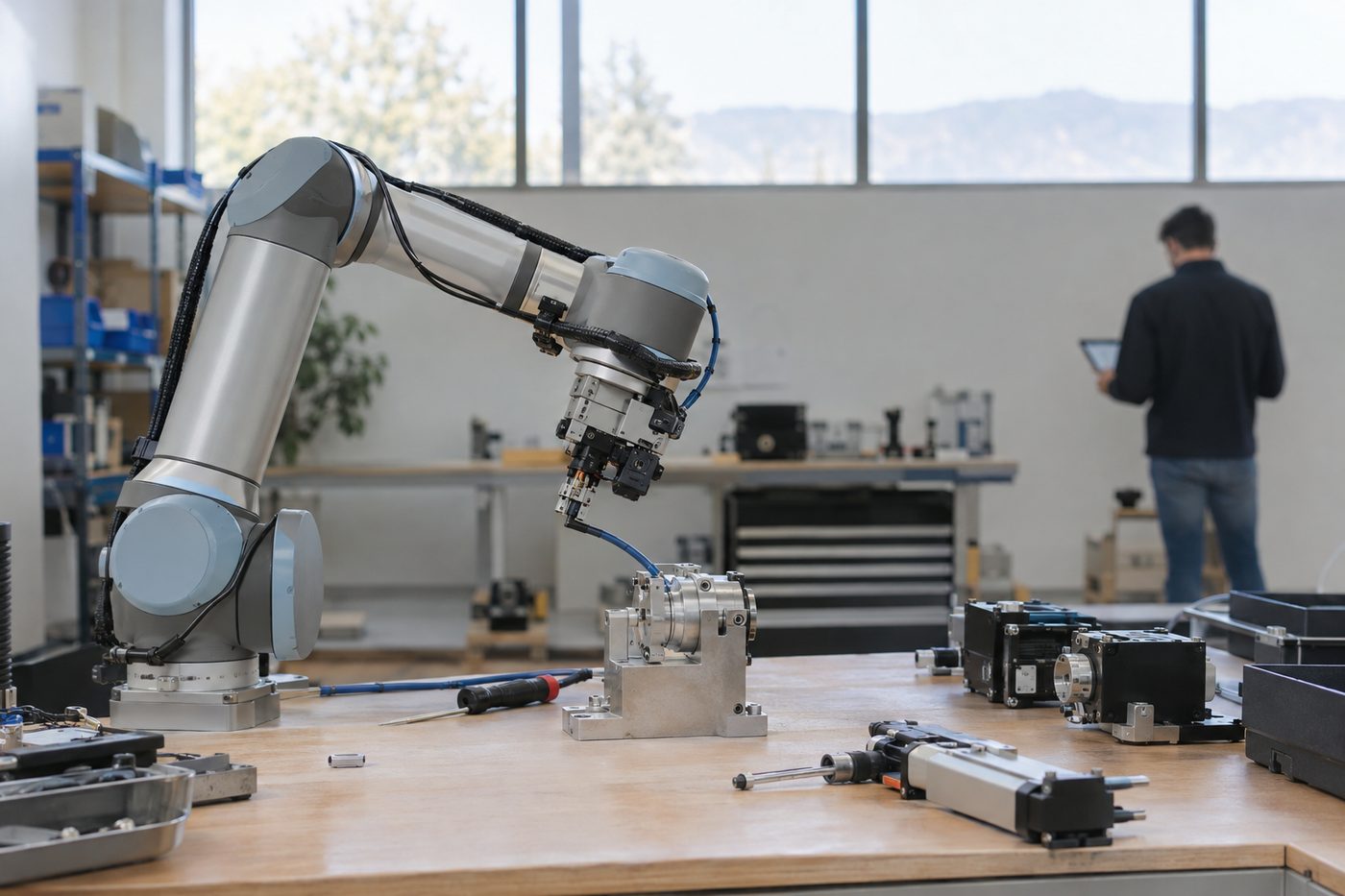
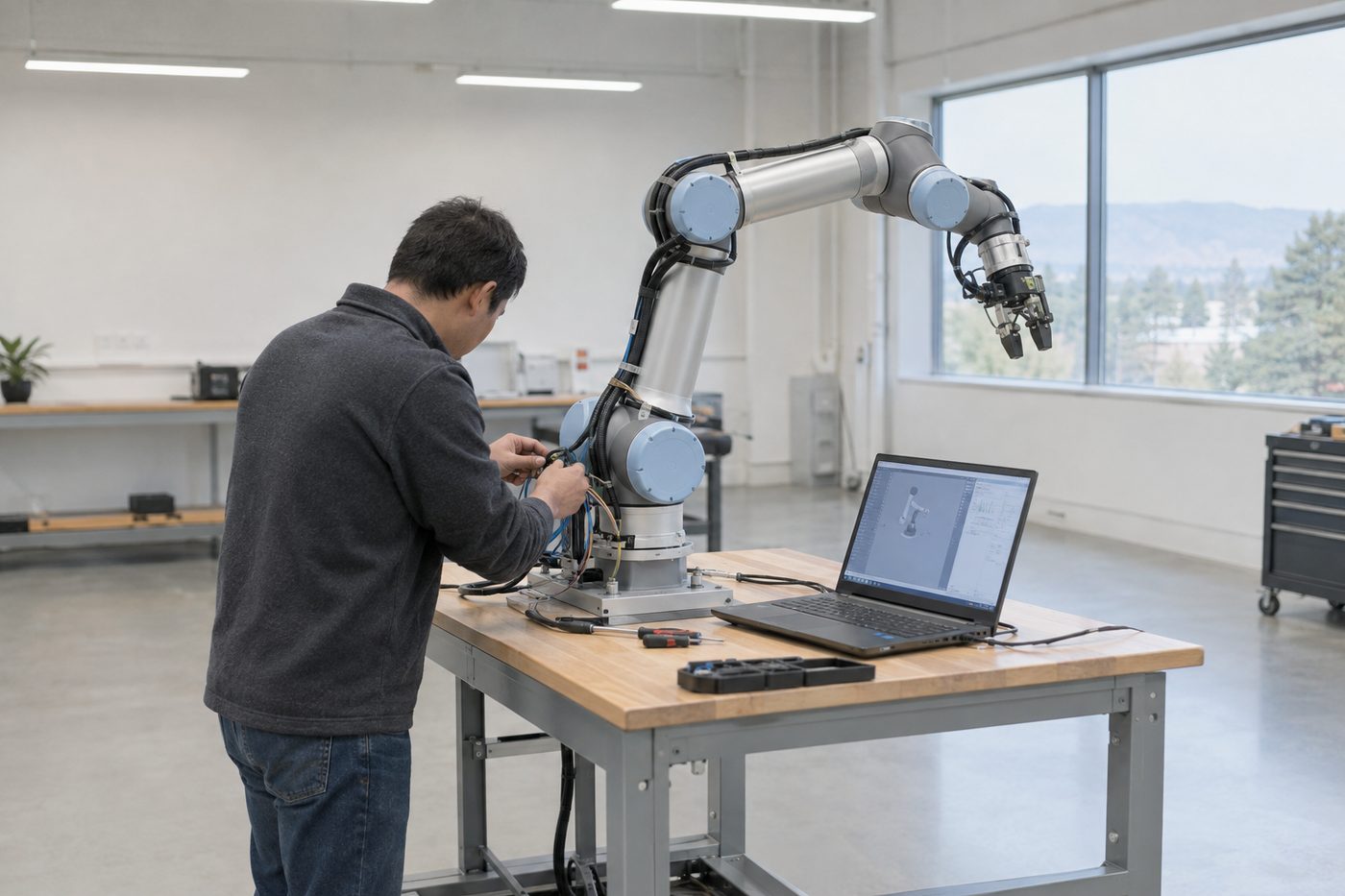
Amulya Vishwanath, veteran product marketing lead at NVIDIA and now founder and managing partner at Techable VC, argues that robotics is still in its “Lego era,” with foundational components such as actuators, robotic hands, software, and safety standards still under development. This view runs directly counter to thinkers who anticipate a near-term “ChatGPT moment” for robotics, when a general foundation model could suddenly unlock large capability, according to TechCrunch Robotics.
Vishwanath comes to her current role after seven years at NVIDIA, where she led product marketing for the company’s robotics platforms, positioning her as a key bridge between hardware development and the growing world of AI-enabled robotics. She is now writing first checks as an early-stage investor in physical AI, spanning robotics, materials science, and life sciences, according to TechCrunch Robotics.
Her approach contrasts sharply with experts like General Intuition CEO Pim de Witte, who outlined earlier this year on the TechCrunch Equity podcast that a generalized robotics foundation model could soon render much of today’s specialized robotics work redundant. Vishwanath insists this vision is premature, arguing the field is still assembling its core technical and regulatory structures—pointing to ongoing work in actuators and safety, as reported by TechCrunch Robotics.
Vishwanath is one of the first women executives to spin out of NVIDIA and launch her own early-stage investment firm focused on physical AI. Her portfolio targets foundational startups, rather than the flashy prospect of a general AI agent. Her firm, Techable VC, is channeling capital into critical component and standards development to shore up the sector’s infrastructure, rather than betting on near-term step-changes in capability, per TechCrunch Robotics.
While some industry voices herald an imminent revolution powered by large, foundation AI models for robotics, Vishwanath identifies a lack of solid and standardized “building blocks” as the principal bottleneck. Her focus remains on the technical complexity of integration and real-world deployment, areas often glossed over in mainstream foundation model discourse, according to TechCrunch Robotics.
Vishwanath’s insistence on prioritizing hardware, safety, and integration aligns with currents seen in the broader robotics investment community, though she is distinct in raising the flag against overoptimism about the role of massive pre-trained models. By anchoring her investment thesis to the sector’s underlying “Lego era” realities, she positions Techable VC in deliberate contrast to VCs chasing rapid, model-driven scale, per TechCrunch Robotics.
Why Is This Important to Investors? Vishwanath’s stance signals a near-term advantage for startups building core robotics components and standards, who may find increased support from fundamentals-focused investors. Firms racing to deploy foundation models before the sector’s technical basics are in place could face higher risk—while suppliers of actuators, sensors, and middleware look poised for sustained demand, as described by TechCrunch Robotics. Reported
Analysis in the Brief → The Robotics Brief (without PPPP) — 2026-10-19
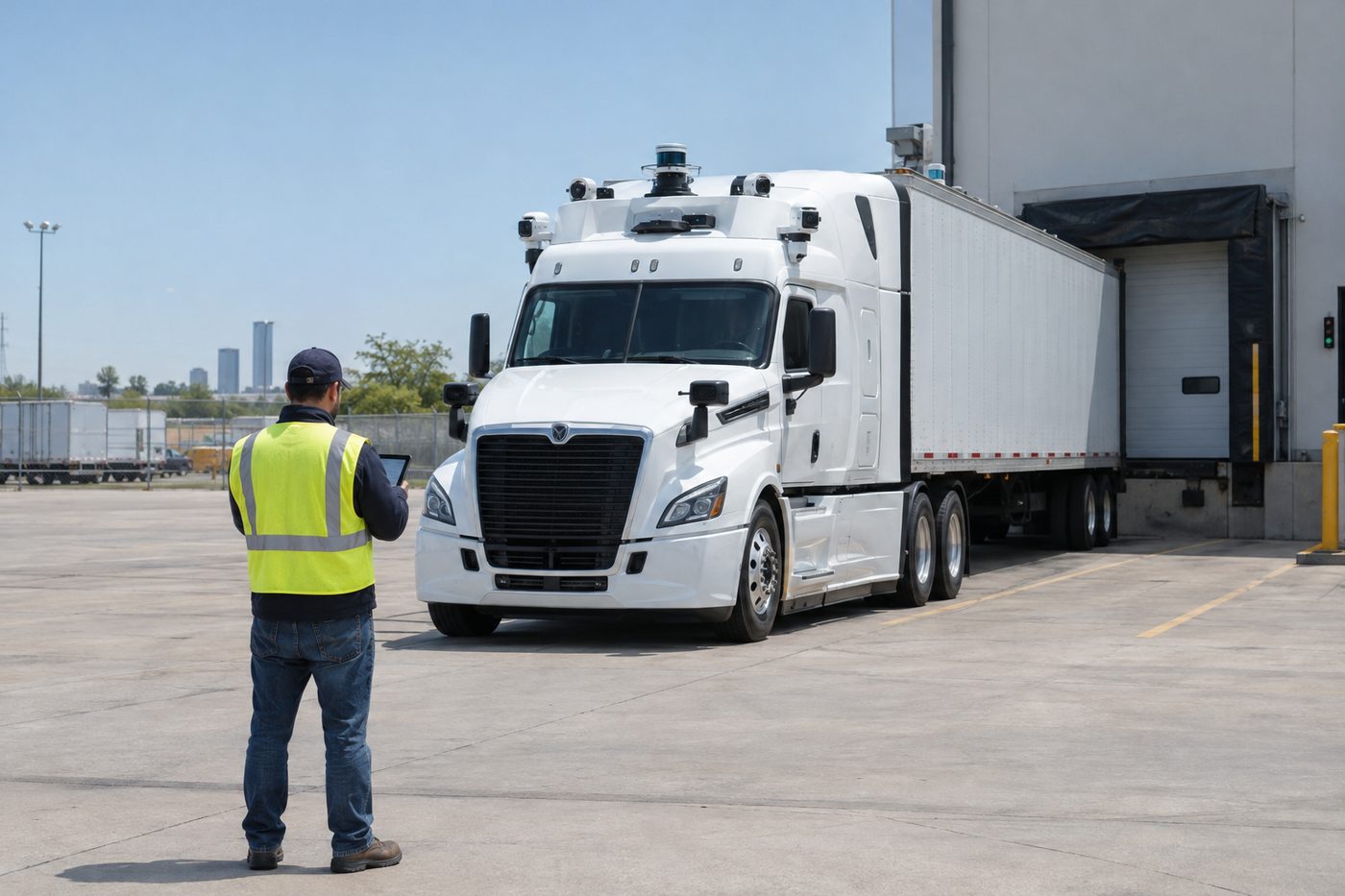
PlusAI has filed registration documents with the US Securities and Exchange Commission as it advances toward a public listing on Nasdaq, targeting a 2027 commercial launch for its autonomous truck product. The proposed merger with Texas Ventures Acquisition III Corp, a special purpose acquisition company, values PlusAI at about $800 million in pre-money equity and could provide up to $300 million in capital for growth, according to Robotics & Automation News.
The firm’s product strategy centers on the SuperDrive autonomous driving system, which it plans to install directly into new trucks at the factory, sidestepping the retrofit model still common in the sector. The company is working with manufactures including Traton Group, Hyundai, and Iveco to integrate SuperDrive at the point of assembly, creating what it describes as “factory-built autonomous trucks.” The 2027 commercial release date matches the company’s roadmap and partnership development pace, as confirmed by Robotics & Automation News.
PlusAI currently runs autonomous freight routes in Texas, operating with logistics partners Ryder and International. These real-world deployments provide a testbed for refining its SuperDrive software and operations infrastructure. The company positions itself as both a technology provider and commercial freight operator, showing a hybrid model that can attract large enterprise shippers wary of unproven tech, according to Robotics & Automation News.
In addition to its autonomous trucking business, PlusAI is generating revenue through its HyperFoundry platform, which commercializes proprietary physical AI developed by the company. Year-to-date revenue from HyperFoundry stands at $25 million, providing near-term cash flow while the core autonomous truck product remains in development. This dual-track strategy distinguishes PlusAI from other SPAC-driven mobility companies that rely solely on long-term product bets, as reported by Robotics & Automation News.
The transaction is structured to deliver approximately $300 million in capital, with over $60 million in fully committed financing and about $236 million held in the Texas Ventures III trust. PlusAI's CEO David Liu stated this capital will give the company the runway to meet its commercial launch objectives and pursue its broader platform ambitions. The deal remains subject to SEC approval and the fulfillment of merger conditions, and the S-4 filing is a regulatory milestone rather than a completed transaction, as emphasized by Robotics & Automation News.
Upon completion of the merger, PlusAI is expected to trade on Nasdaq under the ticker “PXAI.” The company believes public equity markets will provide strategic access to long-term capital and investor visibility as it seeks to scale both the SuperDrive and HyperFoundry lines. This SPAC transaction follows significant public market moves by competitors in automation and robotics, including companies such as Agility Robotics (see Headlines), signaling continued pace—but also intense competition—for large robotics firms pursuing scale.
Why Is This Important to Investors? The PlusAI SPAC deal, if completed, will infuse the firm with up to $300 million, positioning it to meet its 2027 autonomous truck launch and support ongoing revenue through HyperFoundry. Investors should watch for successful SEC clearance and factory integration partnerships with Traton Group, Hyundai, and Iveco as leading indicators. The winners are manufacturing partners and shippers looking to deploy automation at scale, while rivals that lag on factory integration or struggle with near-term revenue face a tougher road. Reported
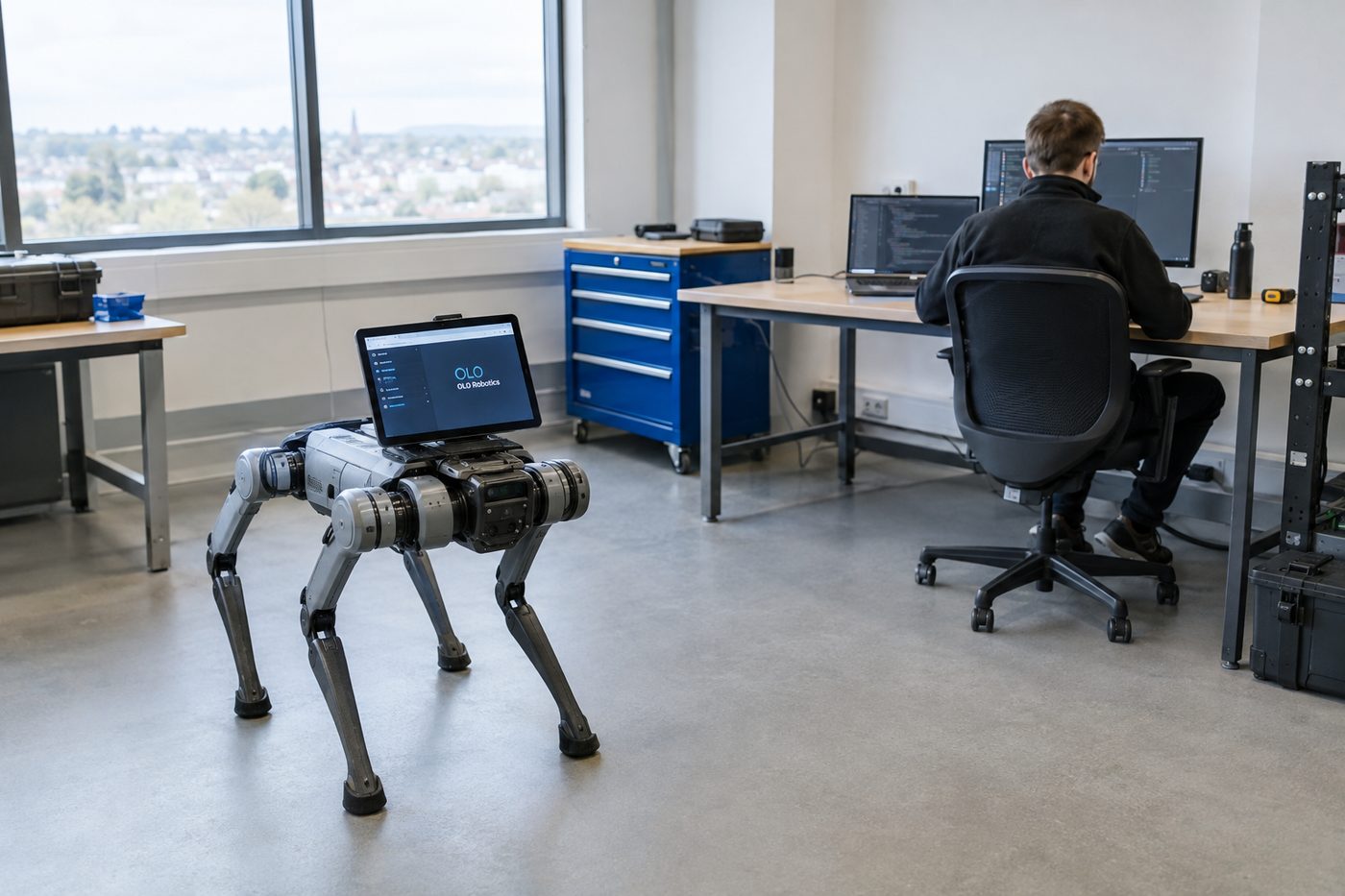
Scan Computers has partnered with OLO Robotics to simplify advanced robot implementation, targeting customers who want to accelerate robotics projects without deep technical expertise. The collaboration combines Scan’s hardware and AI infrastructure with OLO’s browser-based teleoperation, simulation, and autonomous navigation platform, removing the requirement for specialist Robot Operating System (ROS) developers. This move aims to reduce time to deployment from unboxing to operation, whether the goal is for industrial inspections, academic work, or rapid prototyping, according to Robotics & Automation News.
The browser-based OLO platform enables users to test robots in virtual environments, develop custom code, monitor sensors, and move seamlessly from simulation to real-world deployment. Because OLO requires no installation, it can be accessed from almost any device, further broadening accessibility. The platform operates as a layer on top of ROS 2, ensuring each robot maintains its core capabilities while benefiting from OLO’s added navigation and teleoperation tools, as detailed by Robotics & Automation News.
One tangible outcome is that Scan can now offer its Unitree robot range to a wider market. Customers, regardless of programming background, can buy a robot, connect through the browser-based platform, and immediately begin developing and deploying applications. By lowering the skills barrier, Scan and OLO position themselves to capture segments of the robotics market previously locked out due to the shortage of ROS engineers—a point underscored by OLO Robotics COO Eleanor Tang-Smith, cited in Robotics & Automation News.
The partnership also emphasizes each company’s ties with Nvidia: Scan Computers is listed as an Nvidia Elite Partner, while OLO Robotics participates in the Nvidia Inception program. This alignment could signal mutual long-term ambitions in hardware acceleration and AI infrastructure directly tuned for next-generation robotics deployments, as noted by Robotics & Automation News.
Both companies plan active presence at Nvidia GTC Berlin (October 20–22), using it as a showcase for the integrated solution. OLO Robotics will appear at Scan’s stand 3068, likely to demonstrate how the partner workflow reduces adoption friction for research labs, industrial teams, and prototyping groups. This public demonstration could result in immediate feedback and early adoption, according to Robotics & Automation News.
Akash Raja, Director of Robotics at Scan, described the software partnership as strengthening Scan’s positioning as a solution provider, not just a hardware reseller. The value proposition is a single, integrated stack—GPU-accelerated robots supported by an accessible, cloud-delivered control and simulation layer—rather than piecemeal assembly left to the customer’s technical team. The claimed outcome is shorter project cycles and improved confidence for UK-based robotics teams, as stated by Robotics & Automation News.
Why Is This Important to Investors? Scan and OLO could accelerate market expansion for advanced robots in verticals that historically face adoption bottlenecks due to limited technical talent. If the partnership succeeds, scanning technology resellers and specialist platform developers may see competitive pressure to offer integrated, low-barrier solutions, eroding the premium on deep ROS integration expertise—see Robotics & Automation News. Watch for execution risk at scale and whether large organizations validate the accessible-stack pitch with commercial volume orders. Reported
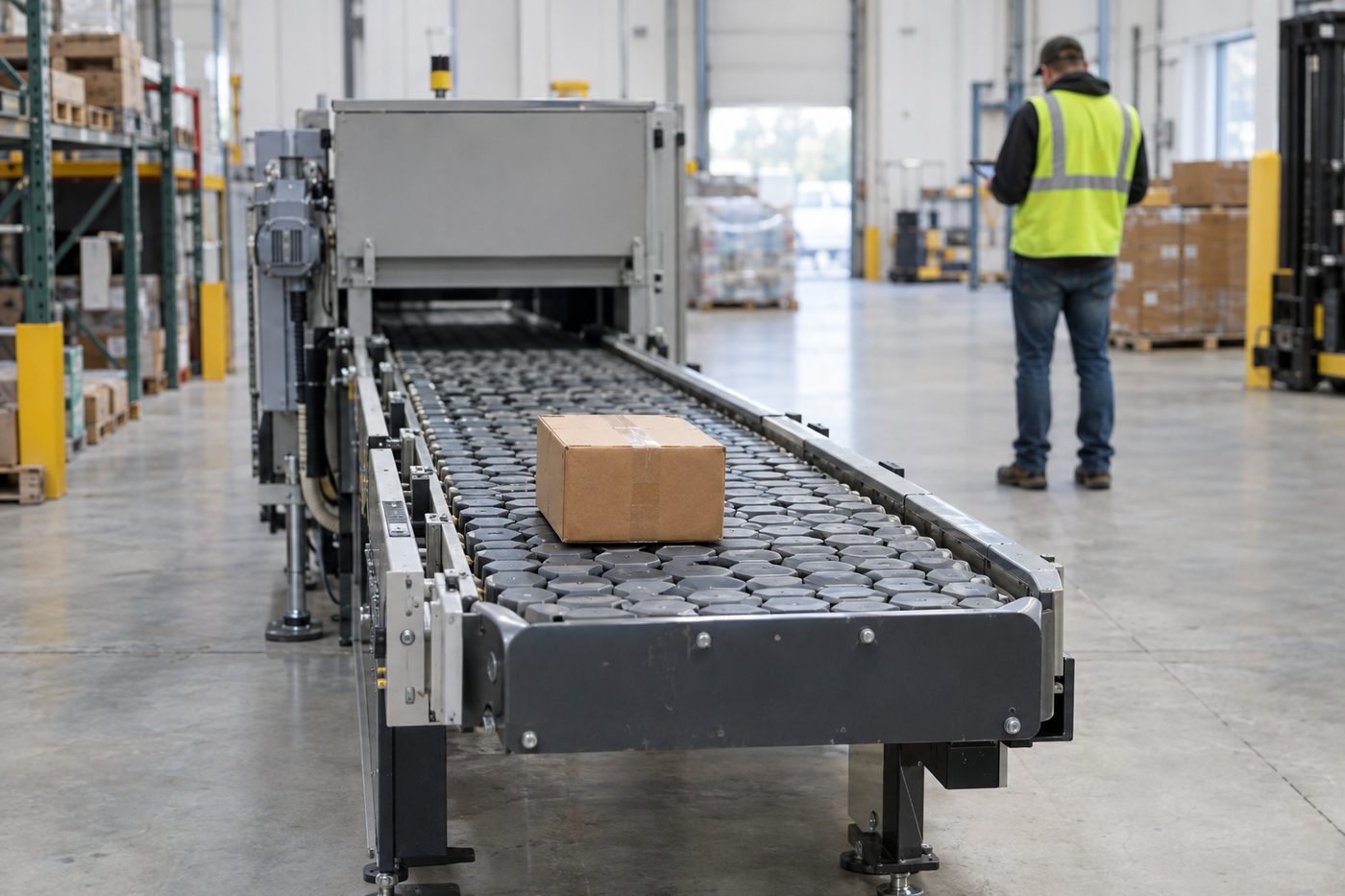
Symbotic has announced the acquisition of cellumation, a German automation company and developer of the celluveyor system, in a deal aimed at strengthening its AI-enabled robotics technology portfolio for the supply chain. The celluveyor platform integrates hundreds of software-driven, omnidirectional cells capable of moving items in any direction, offering a leap beyond traditional conveyor-based sortation systems. By using this technology, Symbotic expects to achieve increased product throughput and a broader range of product handling—all while using less warehouse space, according to Robotics & Automation News.
The celluveyor’s unique design serves as both a transport and decision-making surface, dynamically controlling product movement and destination within fulfillment operations. Symbotic views this acquisition as critical to its roadmap for next-generation inbound and outbound robotic cells. The patented, software-first approach is set to simplify cell architecture for robotic automation and free up valuable warehouse square footage for storage and other revenue-generating purposes, as outlined by Robotics & Automation News.
Symbotic’s Chairman and CEO Rick Cohen highlighted that cellumation’s technology will immediately accelerate Symbotic’s ability to help customers improve performance, optimize space utilization, and reduce system costs. The company considers the celluveyor a “change” for physical AI in logistics, enabling more intelligent automation across constrained facility footprints particularly relevant to postal, e-commerce, and broad logistics sectors, according to Robotics & Automation News.
cellumation’s platform is already in live use by logistics and postal operators internationally, providing evidence of widespread value in real-world deployments. As part of the acquisition terms, cellumation will maintain its own brand and serve its existing customer roster, while also being integrated into Symbotic’s automation solutions. This dual-path approach allows Symbotic to address both direct and integrator channels while enhancing cross-market reach, as documented in Robotics & Automation News.
The strategic rationale extends to continuing organizational autonomy for cellumation, with the founding leadership—CEO Dr-Ing Hendrik Thamer and CTO Dr-Ing Claudio Uriarte—remaining on board to drive ongoing operations and technology development. Cohen emphasized that this deal follows recent Symbotic acquisitions of ARMS Innovations and Fox Robotics, reinforcing a broader strategy to assemble a diverse automation portfolio with both standalone and integrated products (Robotics & Automation News).
For Symbotic, the acquisition also means an immediate boost in European presence, as cellumation brings a proven regional organization, established customer relationships, and a track record of successful deployment across the continent. The Bremen-based company adds strategic scale and depth for Symbotic in key logistics markets where space utilization and operational flexibility drive capital decisions, according to Robotics & Automation News.
Why Is This Important to Investors? Symbotic’s acquisition of cellumation signals intensified competition in the global warehouse automation market, as advanced, space-saving sortation technology will appeal to both existing customers and new integrators. Companies with legacy conveyor infrastructure may be at a disadvantage as the market shifts toward intelligent, software-driven material handling, and the move gives Symbotic a direct path to deeper European logistics contracts and innovation cycles, as reported by Robotics & Automation News. Reported
Analysis in the Brief → The Robotics Brief (without PPPP) — 2026-10-19
Why we publish
The robot economy is being built right now, in filings, factory floors and funding rounds most people never read.
The Robot Economy reads them every week so you can act before the headlines. Robotics Weekly is free, for everyone following the shift. The paid edition adds the Brief, for operators and investors who have to act on it.
The paid edition
$8 / month
Public companies, capital, supply chains and analysis. Every Monday, every claim tagged and sourced.
SubscribeCharter price, locked for three years.
Try it first
Read four Monday issues of the paid edition on us. No card up front. Keep it at the charter price or walk away.
Start my free monthFree download
Vol. 1: twelve charts on where the machines, the money and the jobs are going.
Download the e-book