The paid edition
Everything plus the Brief
$8 / month
Public companies, capital, supply chains and analysis. Every Monday, every claim tagged and sourced.
SubscribeCharter price, locked for three years.
A Robot Economy Publication
Volume 7, Week of October 12, 2026
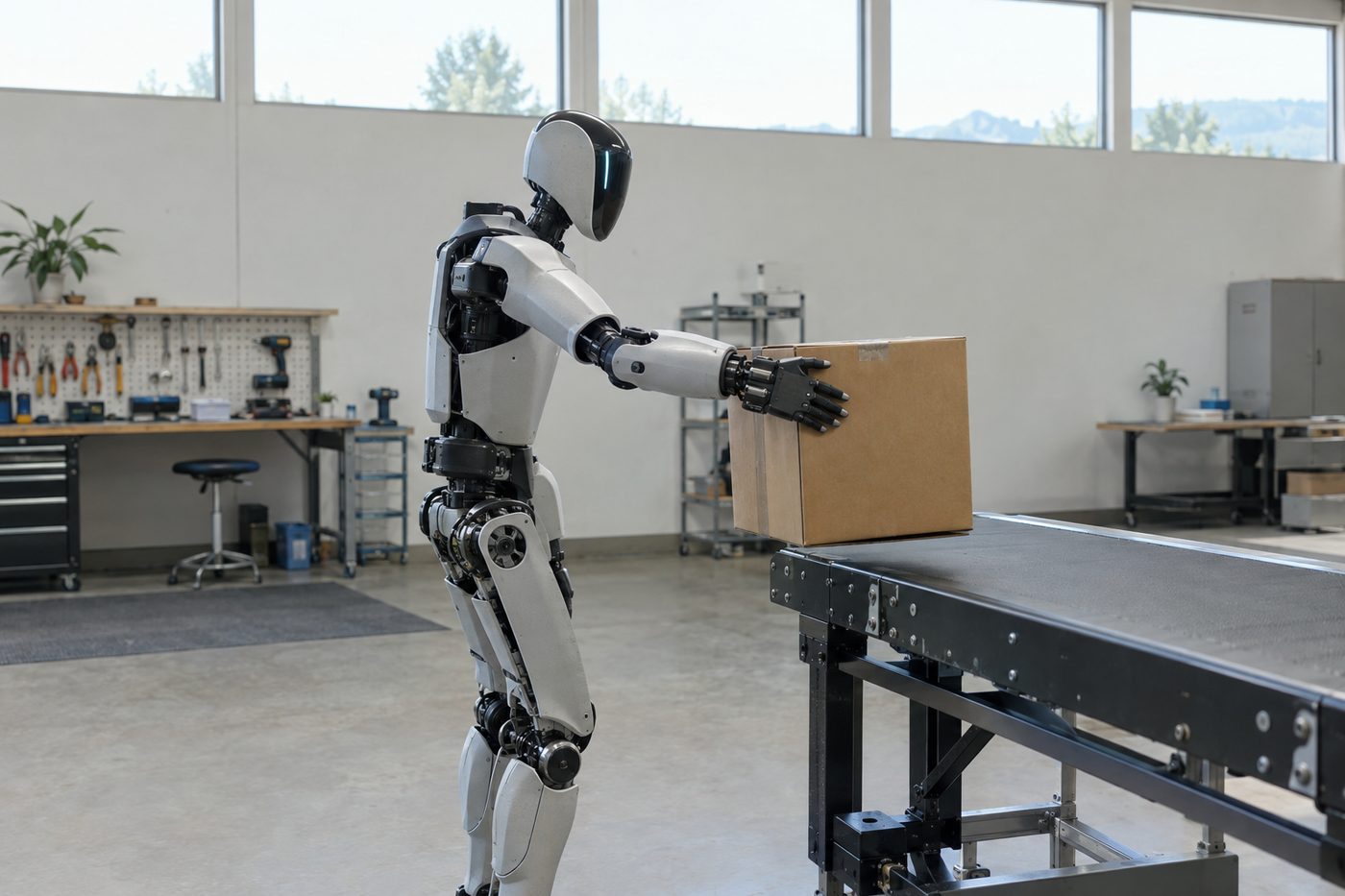
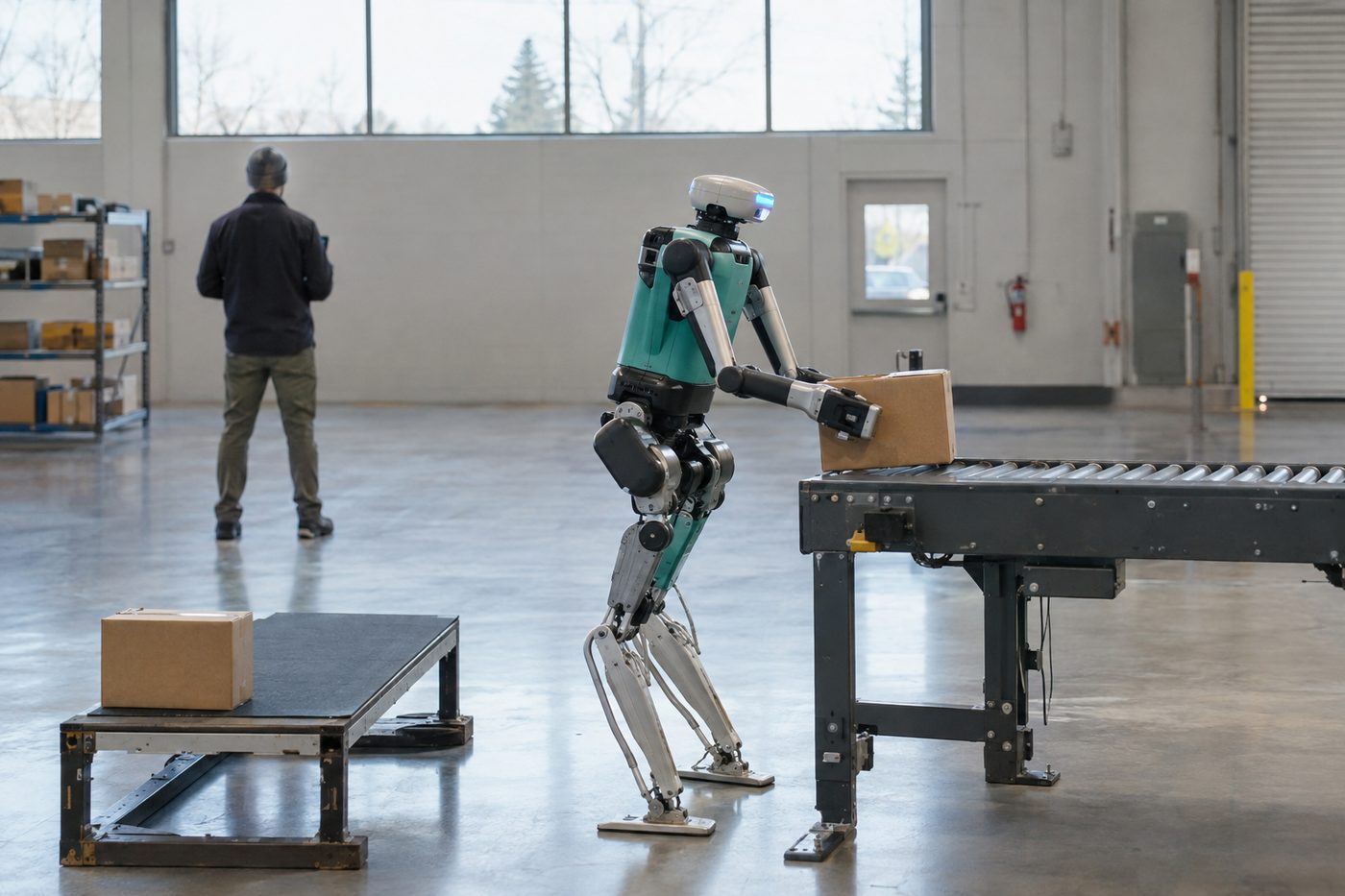
Agility Robotics has recruited a new executive team to accelerate the commercialization of its Digit humanoid robot and manage scaling operations, according to the Robot Economy record. This organizational change marks a significant handover of company leadership from its founding technical team to experienced professionals in product delivery and commercial scaling. The shift comes alongside the launch of Digit 5, aimed squarely at labor-intensive workplace tasks.
The company was cofounded by Jonathan Hurst out of Oregon State University in 2015, with a vision to create robots that navigate and interact with the world as effectively as humans, as detailed by IEEE Spectrum Robotics. Cassie, Agility Robotics’ first commercial bipedal robot, sold 10 units at $250,000 each to leading institutions, including Harvard and Caltech, saturating the research market quickly according to the Robot Economy record.
The technological journey from ATRIAS, an early dynamic walking platform, to the more solid and functional Digit series required not just technical advances but also a sharper commercial focus. As the company tried to address practical customer needs in warehousing and logistics through Digit, pressure mounted to prioritize reliability and productivity over scientific elegance, as described by IEEE Spectrum Robotics.
Key commercial deployments included pilots with Ford Motor Company for last-mile delivery and with Amazon and global logistics provider GXO for warehouse work. Robotics & Automation News notes that by early 2024 Digit had reached the cover of Time magazine, while the new RoboFab facility now boasts capacity to produce more than 10,000 Digit 5 units per year, according to the Robot Economy record.
The company's evolving product, Digit 5, is engineered to safely work alongside people and lift up to 23-kilogram bins. It now runs for 90 minutes on a 9-minute recharge, a feature recently highlighted by the Robot Economy record. Fast charging is targeted at enabling robots to operate up to 20 hours a day to fit customer shift schedules, while a head was added for practical reasons, such as sensor and antenna placement.
Iterative feedback from commercial partners, including demands for enhanced safety, battery life, and regulatory compliance, pushed Agility Robotics’ leadership to accelerate hardware improvements and rethink product priorities. According to IEEE Spectrum Robotics, this caused significant friction between Agility’s founders and the new executive team, requiring the founders to cede daily operational control for the company’s long-term success.
Why Is This Important to Investors? Agility Robotics’ transition to a new executive team and the hard pivot to commercial viability positions the company for faster scale-up, especially with its 70,000-square-foot RoboFab factory and newly industrialized Digit 5. Institutional investors will watch whether the new team can manage the operational and customer support demands that stymied the founding team. If the commercial team executes, Agility stands to challenge early entrants such as Figure and Tesla in labor automation for warehousing and logistics, according to the Robot Economy record. Verified
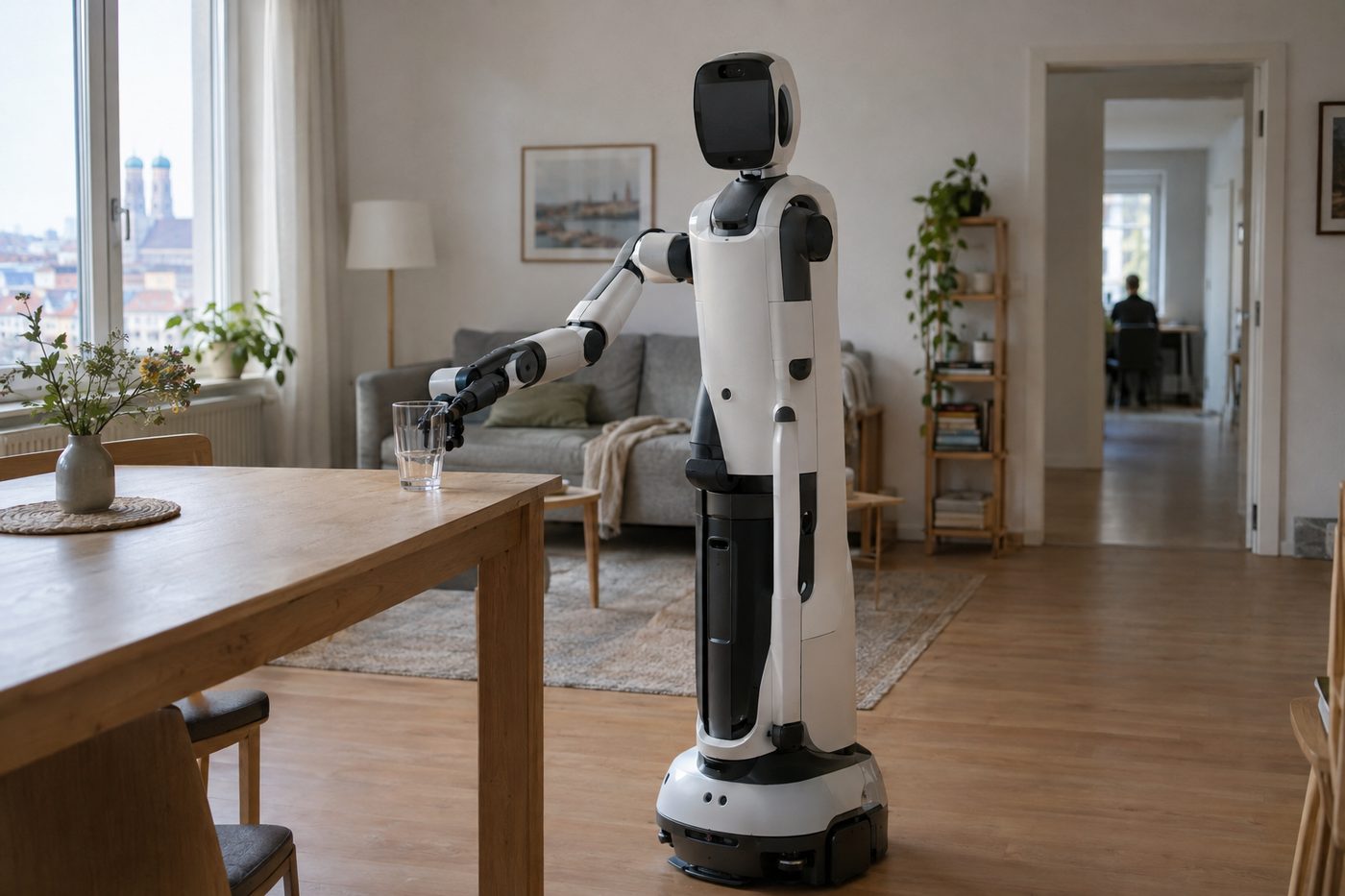
Plim Robotics has revealed a wheeled home robot designed for both autonomous household assistance and direct teleoperation by family or caregivers, quoting a two-hour battery runtime and Jetson Thor onboard computing, according to the Robot Economy record. The company, newly rebranded from Devanthro, positions the Plim robot as a physically present extension for distant relatives, friends, or professional caregivers. Plim’s two operation modes—standalone and “step-in”—support both automatic household tasks and remote person-to-person interaction, with control available over distances up to 9,000 kilometers.
The Humanoids Daily source explains that Plim’s telepresence technology presents the remote operator’s face and voice in real-time through a visor display, while supporting expressive animated faces. The Munich-based company is pursuing a dual market: aging-in-place and broader household support, aiming to merge everyday utility with emotional presence in the home. Experience in elderly care settings since 2024 forms the technical and commercial foundation for its broader launch.
Plim stands 1.65 meters tall, weighs 80 kilograms, and uses a three-wheel omnidirectional drive for navigating home spaces, according to Humanoids Daily. Its arms, offering seven degrees of freedom and a 3-kilogram payload, use two-finger grippers for object handling. The chassis is covered by a soft outer shell to cushion bumps and contact. Onboard sensors include stereo RGB and depth cameras, millimeter-wave radar, and microphones, supporting both household navigation and rich remote interaction.
For computing, Plim integrates Nvidia’s Jetson Thor and uses ROS 2 middleware, combining edge AI with cloud compute for task and communications functions, as Humanoids Daily describes. Connectivity options feature 5G and Wi-Fi 6, addressing high-bandwidth requirements for video, teleoperation, and AI processing. The sensor suite, including a 4K fisheye camera, is positioned to enable responsive autonomy and multimodal telepresence. Millimeter-wave radar complements vision and touch, improving reliability in cluttered home environments.
A two-hour battery runtime sets a concrete boundary on continuous autonomous or remote use; Plim’s site positions the robot as available “round-the-clock,” but this would depend on regular scheduled charging, not a single-session charge. Service models for 24/7 support are therefore likely to require management of power cycles or backup units, a detail not further addressed in the current product reveal. Commercial terms—including pricing, maintenance support, and measured home performance—remain undisclosed.
The product’s web presentation shows broad application scenarios ranging from shared family activities and bedtime stories to hands-on kitchen help and companionship. Plim’s autonomy relies on self-learning and adapting to the household, but the company does not state task success rates or specify the frequency of needed human intervention, according to Humanoids Daily. This absence limits direct benchmarking against existing home service robots.
Company statements indicate that initial development and trials took place in 2024, with a strong emphasis on real-world home deployments and a gradual expansion to serve non-elderly populations. Rich Robinson, Clinical Professor of Entrepreneurship at Peking University, is listed as having a referral partnership with Plim, suggesting early academic and commercial networking. The new branding seeks to frame Plim as approachable and versatile in the competitive home robot field.
Why Is This Important to Investors? Plim Robotics’ entry into the home robot sector with a dual-use, telepresence-focused offering targets a market still searching for viable household autonomy and human-robot social integration. Investors should monitor the company’s ability to turn technical promises—especially remote operation, two-hour runtime, and real-world autonomy—into sustained commercial deployments and partnerships. Pricing, household intervention data, and customer adoption rates will decide if Plim’s approach moves the sector beyond niche pilots. The Robot Economy record marks this as a stage-setting announcement rather than a full go-to-market launch. Verified
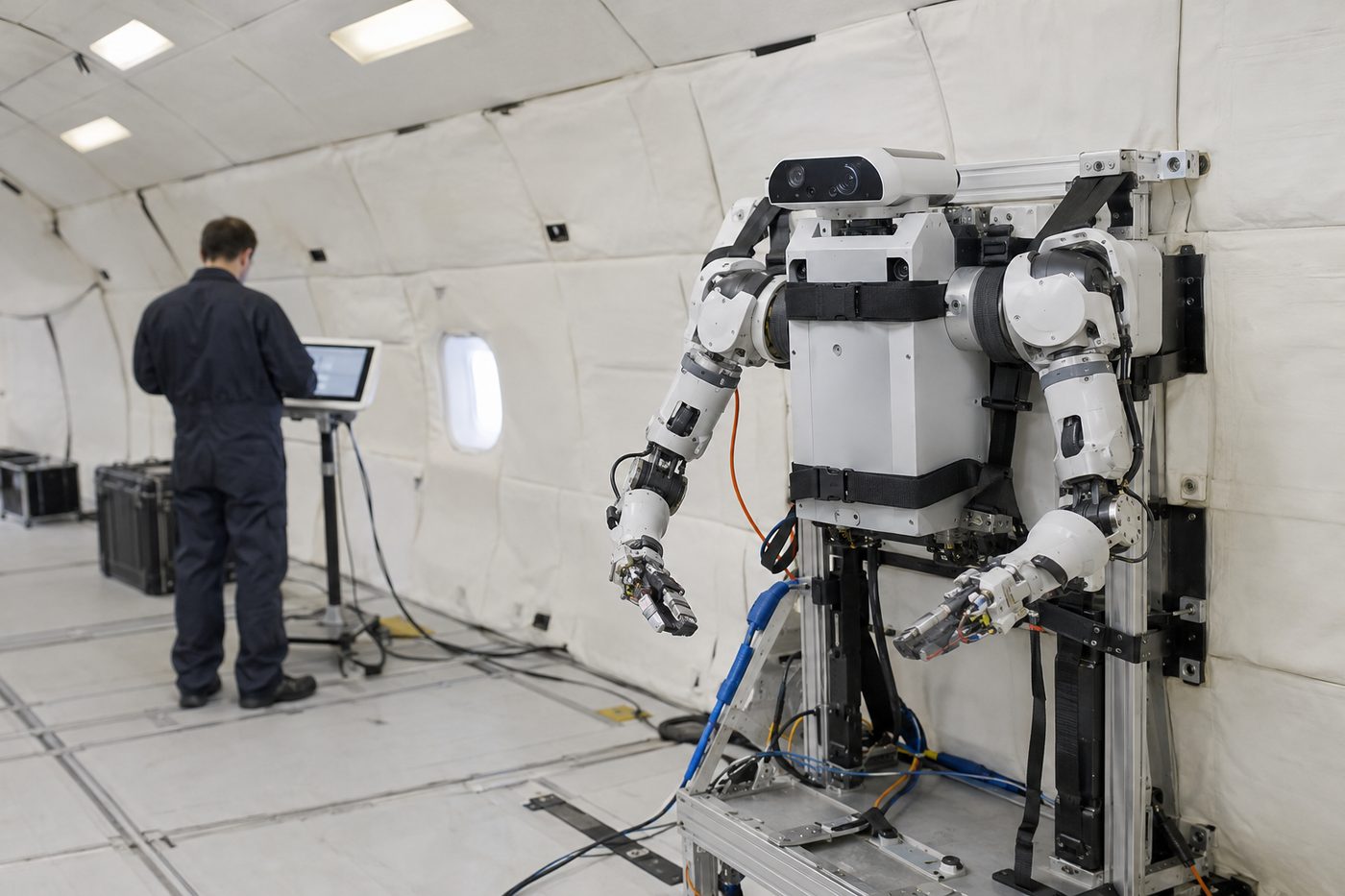
Icarus Robotics has announced that JOY, its free-flying robot designed for the International Space Station (ISS), is slated for delivery to NASA in January 2027, with a mission launch to the station expected later that year. This move follows a pivotal series of microgravity tests conducted in September, during which JOY completed 66 parabolas over four flights, accumulating two minutes of weightlessness—a significant precursor to ISS operations—according to The Robot Report.
JOY is engineered to handle cargo and logistics work inside the ISS, equipped with seven-degree-of-freedom arms and adaptive pinch grippers to free astronauts for higher-value research. The system’s development involved rigorous manipulation, state estimation, and flight control assessments in microgravity; Icarus reports all major test objectives were met, building confidence in JOY’s readiness for the scheduled NASA handover, as The Robot Report outlined.
The parabolic flights took place in Canada due to a suspension of U.S.-based zero-gravity flight operators, underlining logistical challenges that currently force American space robotics ventures to test hardware overseas, as detailed by The Robot Report. Icarus co-founder and CEO Ethan Barajas emphasized that this constraint impacts lead times and access for other U.S. startups building technology for orbit.
The test campaign isolated and validated three critical systems in sequence: manipulation hardware, onboard state estimation, and the robot’s autonomous flight control. Co-founder and CTO Jamie Palmer highlighted that JOY’s arms—built entirely in-house—exceeded expectations when returning to teleoperated setpoints after physical disturbances. The team could not teleoperate during flight but relied on pre-recorded trajectories benchmarked both terrestrially and in weightlessness, The Robot Report recounted.
Flight control validation revealed operational challenges unique to aircraft-based microgravity simulation, variances and settling periods during parabolas that differ from the ISS environment. The team expects the hardware’s in-space performance to benefit from more stable gravitation conditions aboard the station and plans to iteratively improve JOY’s autonomy system once live data is gathered on orbit, as described by The Robot Report.
Icarus, a Brooklyn-based startup, raised $6.1 million in seed funding last year to scale its hardware toward production readiness, The Robot Report noted. The company distinguishes JOY from previous ISS robots like Astrobee by using NVIDIA Jetson Thor chipsets and focusing on sophisticated manipulation, rather than camera-based inspection or basic interaction.
Why Is This Important to Investors? This project positions Icarus Robotics as a high-profile supplier of dexterous, autonomous manipulation systems in space, a market that remains structurally underserved due to regulatory and infrastructure hurdles. Investors should monitor progress toward NASA’s final timeline and the competitive gap Icarus hopes to open over ISS platforms like Astrobee, as the Robot Economy record details JOY’s forthcoming launch and operational focus. Verified
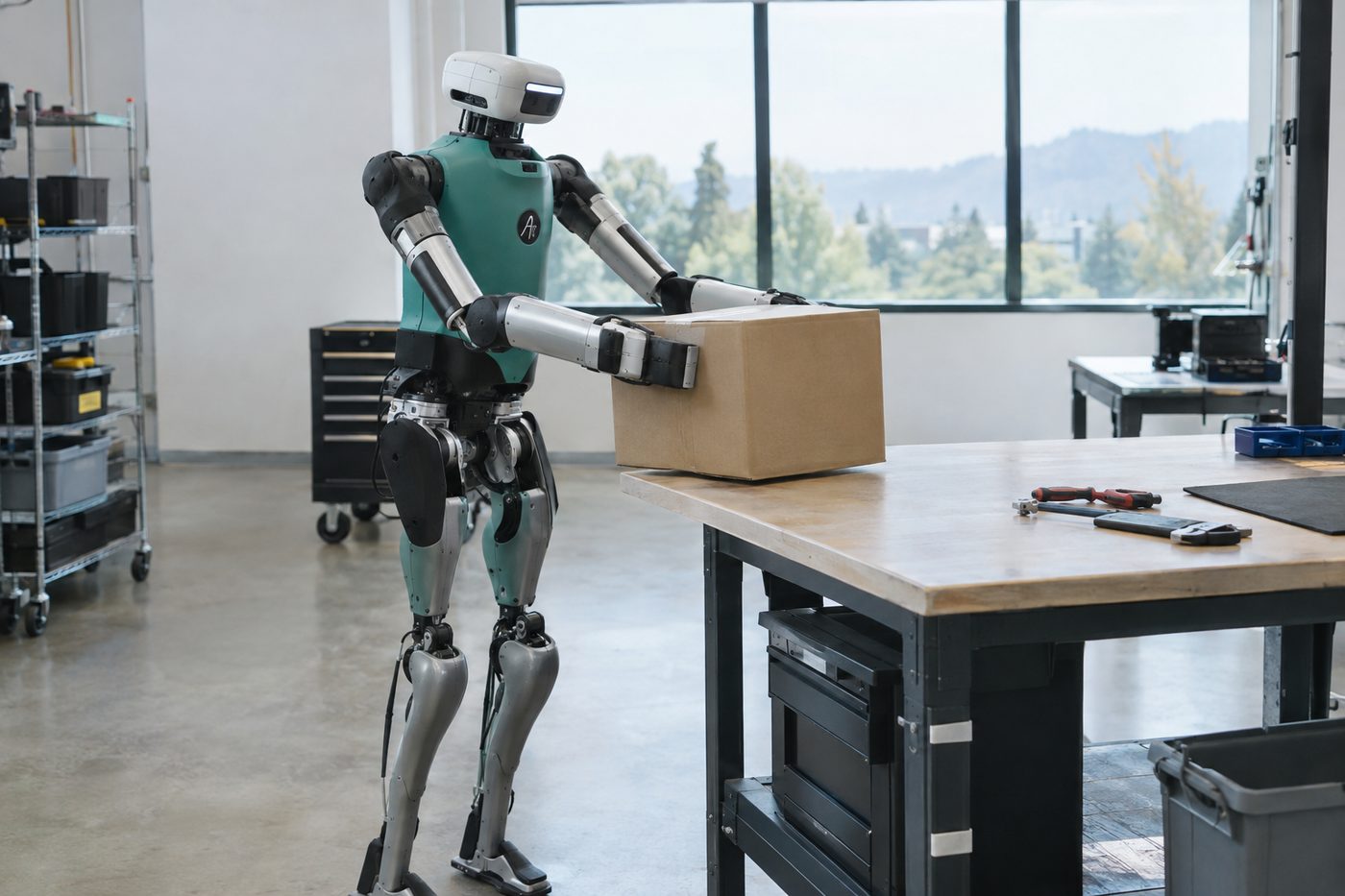
Agility Robotics is on the cusp of going public, with a final shareholder meeting scheduled for November 2, 2026—a decisive step before debuting as a pure-play U.S. humanoid robotics company under the ticker AGLT, according to the Robot Economy record. This follows SEC approval of Agility’s merger with Churchill Capital Corp XI, completed October 13. The forthcoming vote is framed as the last formal hurdle before an IPO, making Agility the only U.S.-listed firm dedicated solely to humanoid robots.
The Robots & Startups (Andra Keay) source shows Agility’s commercial traction, noting over $300 million in multi-year orders for its Digit v5 humanoid platform. The company also claims its sales pipeline “is multiple times that amount,” signaling significant downstream demand already in place. Agility’s management characterizes the IPO as a launchpad for fulfilling these orders and scaling deployment.
The upcoming capital infusion from the IPO and the Churchill Capital merger is projected to raise more than $620 million in new funding, per Robots & Startups. This war chest is earmarked for scaling the deployment of Digit v5 units, supporting operational growth, and maintaining Agility’s lead in embodied AI. Management also positions the move as critical to seizing a generational technology shift in robotics.
The company emphasizes its track record of operational deployments and proprietary technology underlying Digit v5 as differentiators in what it describes as an emerging, high-growth sector. Agility claims to already operate active commercial deployments, setting it apart from both niche industrial robotics suppliers and general-purpose robotics players, as described by Robots & Startups.
Rival industrial humanoid efforts are intensifying globally. Firms like UBTECH Robotics are posting a 1,445% surge in full-size embodied humanoid revenue for H1 2026, showing brisk adoption and market validation, according to the Robot Economy record. The scale and commercial orientation of these deployments underline how Agility’s pure-play public listing would position it in a globally competitive field.
The IPO comes at a time of acute investor focus on capital-intensive robotics projects. Direct competitors such as Figure AI have committed billions to AI training (see Headlines), while large-scale backers like SoftBank are making $18 billion bets in adjacent automation categories, according to the Robot Economy record. Agility’s financial strategy targets scale and speed to fulfill order commitments and defend its market lead.
Why Is This Important to Investors? A successful public listing would instantly make Agility Robotics the only standalone, pure-play humanoid company on a major U.S. exchange with proven commercial deployments and substantial signed multi-year orders. This creates a new opportunity to invest directly into the humanoid sector at an industrial inflection point, but also raises the stakes for competitors and late-stage private rivals who must now compete with a better-funded, public, and standardized player. Verified
Why we publish
The robot economy is being built right now, in filings, factory floors and funding rounds most people never read.
The Robot Economy reads them every week so you can act before the headlines. Robotics Weekly is free, for everyone following the shift. The paid edition adds the Brief, for operators and investors who have to act on it.
The paid edition
$8 / month
Public companies, capital, supply chains and analysis. Every Monday, every claim tagged and sourced.
SubscribeCharter price, locked for three years.
Try it first
Read four Monday issues of the paid edition on us. No card up front. Keep it at the charter price or walk away.
Start my free monthFree download
Vol. 1: twelve charts on where the machines, the money and the jobs are going.
Download the e-book