The paid edition
Everything plus the Brief
$8 / month
Public companies, capital, supply chains and analysis. Every Monday, every claim tagged and sourced.
SubscribeCharter price, locked for three years.
A Robot Economy Publication
Volume 6, Week of October 5, 2026
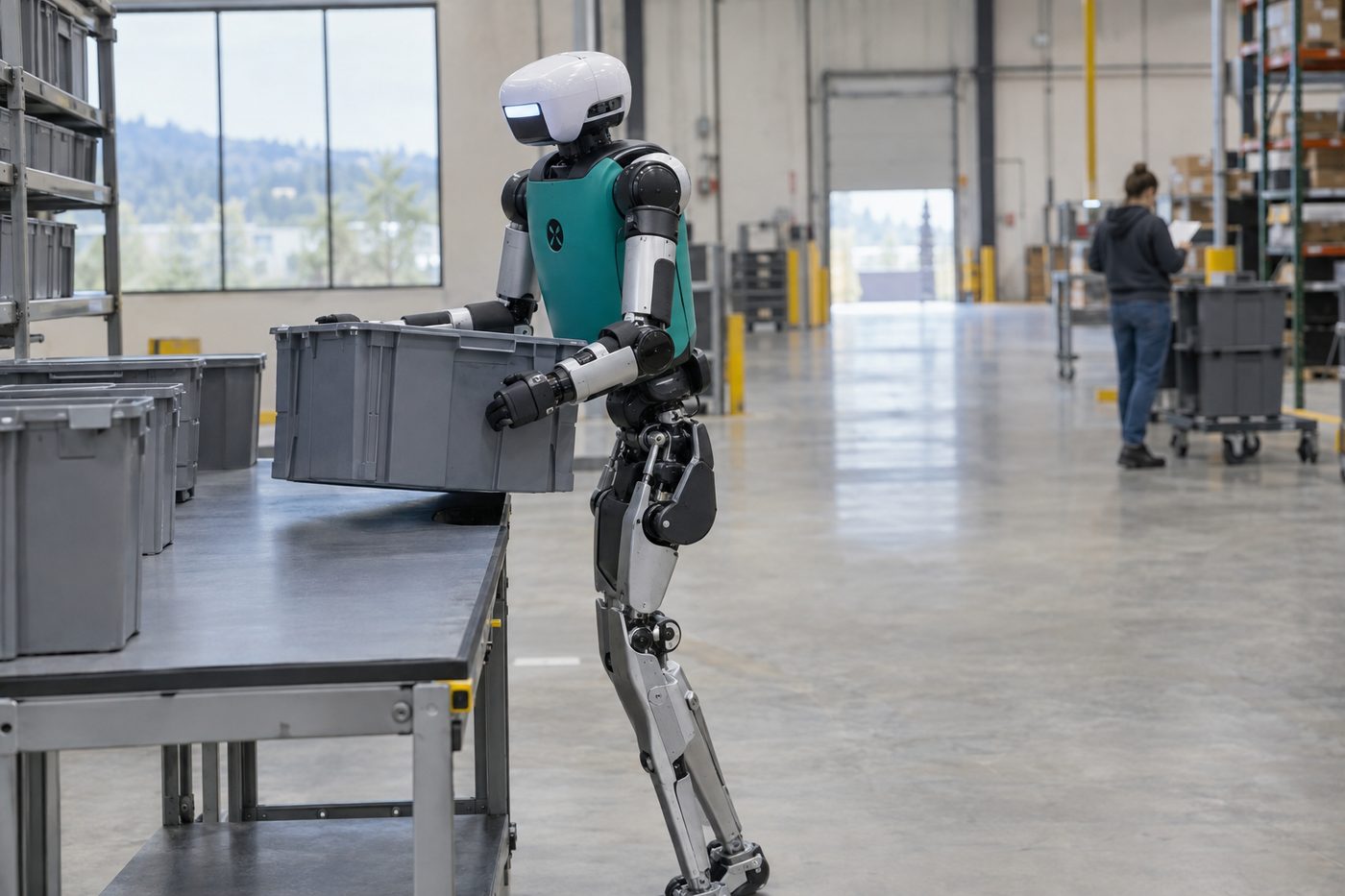
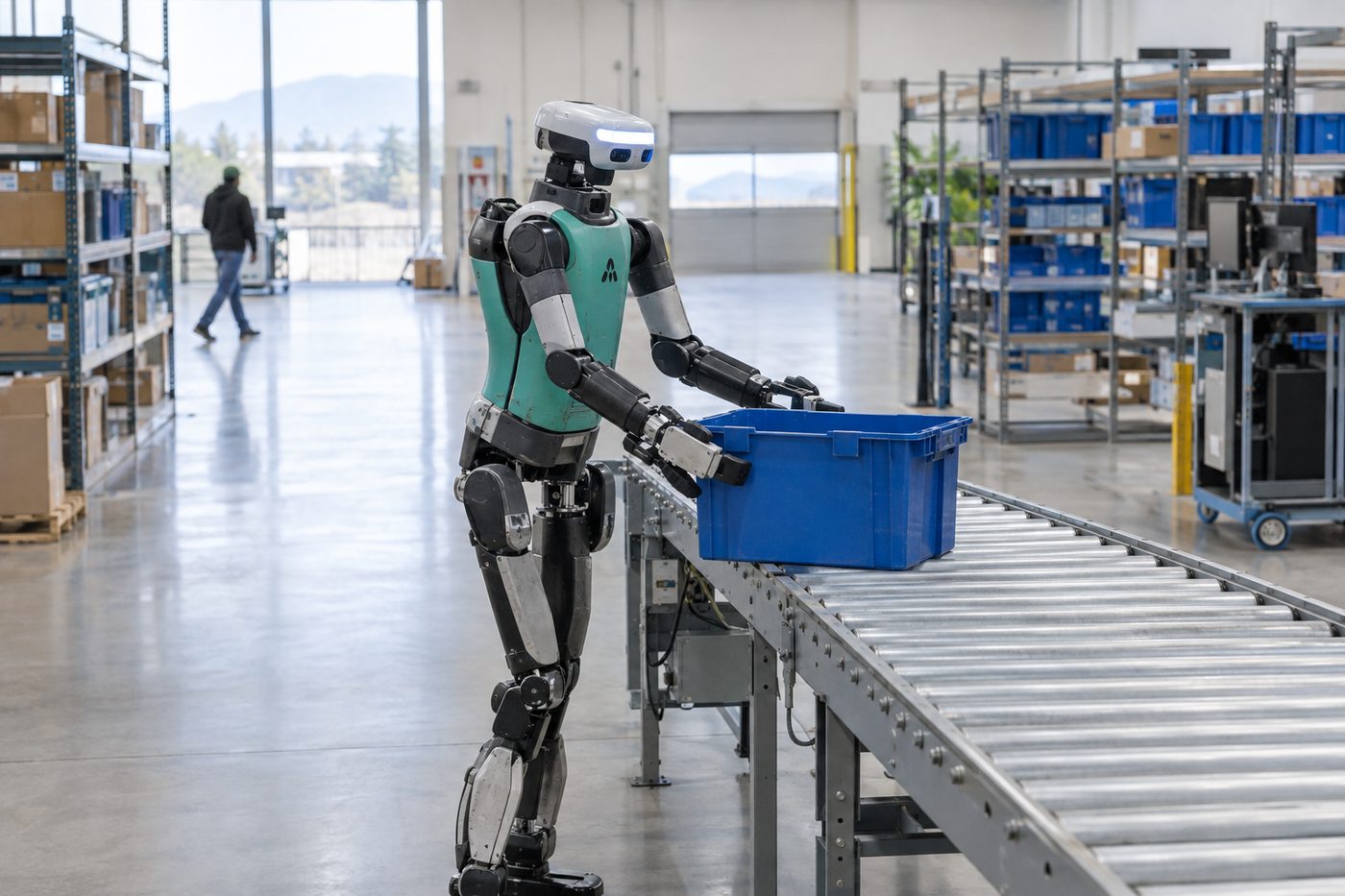
Agility Robotics has recruited a new executive team to lead the commercialization of its Digit humanoid robot, a significant move as the company pivots from research to large-scale production and deployment, according to the Robot Economy record. This management overhaul shows the company’s intent to drive Digit from an engineering concept toward a commercially viable product capable of handling physically demanding warehouse tasks. The new executives are tasked with navigating the complex demands of scaling, compliance, and commercial value creation.
The Digit 5 robot embodies this pivot to commercialization. Designed to safely lift 23-kilogram bins and operate 90 minutes on a 9-minute fast charge, Digit 5 targets warehouse roles that are considered too monotonous or strenuous for human labor, IEEE Spectrum Robotics states. The new executive team insisted on major feature upgrades—including larger batteries and regulatory compliance—to make Digit 5 a viable product, departing from earlier prototypes that prioritized elegant mechanics over practical deployment.
Agility Robotics’ journey began in academia, with co-founder Jonathan Hurst’s Dynamic Robotics Laboratory at Oregon State University. Early platforms like ATRIAS, built strictly to validate walking and running biomechanics, served research purposes but lacked commercial potential. The first product, Cassie, was aimed at research labs, selling 10 units at $250,000 each to institutions including Harvard, Caltech, and the University of Michigan, according to the Robot Economy record. The transition to building a market-ready robot required a strategic shift and a broader organizational skill set.
The company’s 70,000-square-foot RoboFab facility has the capacity to produce more than 10,000 Digit 5 robots annually, the Robot Economy record shows. This manufacturing capability signals Agility’s commitment to meeting sharp customer demand and marks a substantial departure from the low-volume model of research robotics sales. Practical challenges—such as managing nationwide deployments, customer support, fleet software, and supply chains—prompted the founders to hand over control to seasoned executives with deep operational experience.
Prior versions of Digit had been deployed in commercial pilots with Ford, Amazon, and logistics provider GXO. These pilots exposed the gap between university-scale experiments and real-world operational requirements, IEEE Spectrum Robotics notes. Early deployments required intensive support, yielding little profit but offering irreplaceable field experience for the engineering team.
Technical compromises were necessary to ensure reliability and regulatory compliance. The new leadership prioritized essential features for customers—including enhanced stability and user-friendly interfaces—sometimes at the expense of the company’s original vision of mastering natural motion. The introduction of a head to the robot, primarily for improved sensor and antenna placement, also enhanced human-robot interaction, a change embraced under the new regime.
Why Is This Important to Investors? Agility Robotics’ executive shakeup was driven by the need to transition from promising prototypes to reliable, large-scale commercial operations, as documented by the Robot Economy record. Investors should watch how the new leadership’s focus on manufacturability, feature completeness, and regulatory compliance translates to customer adoption and sustainable margins. The winners may include logistics customers gaining new automation options and Agility Robotics if scale is achieved; the losers could be engineering-driven startups that neglect commercial readiness. Verified
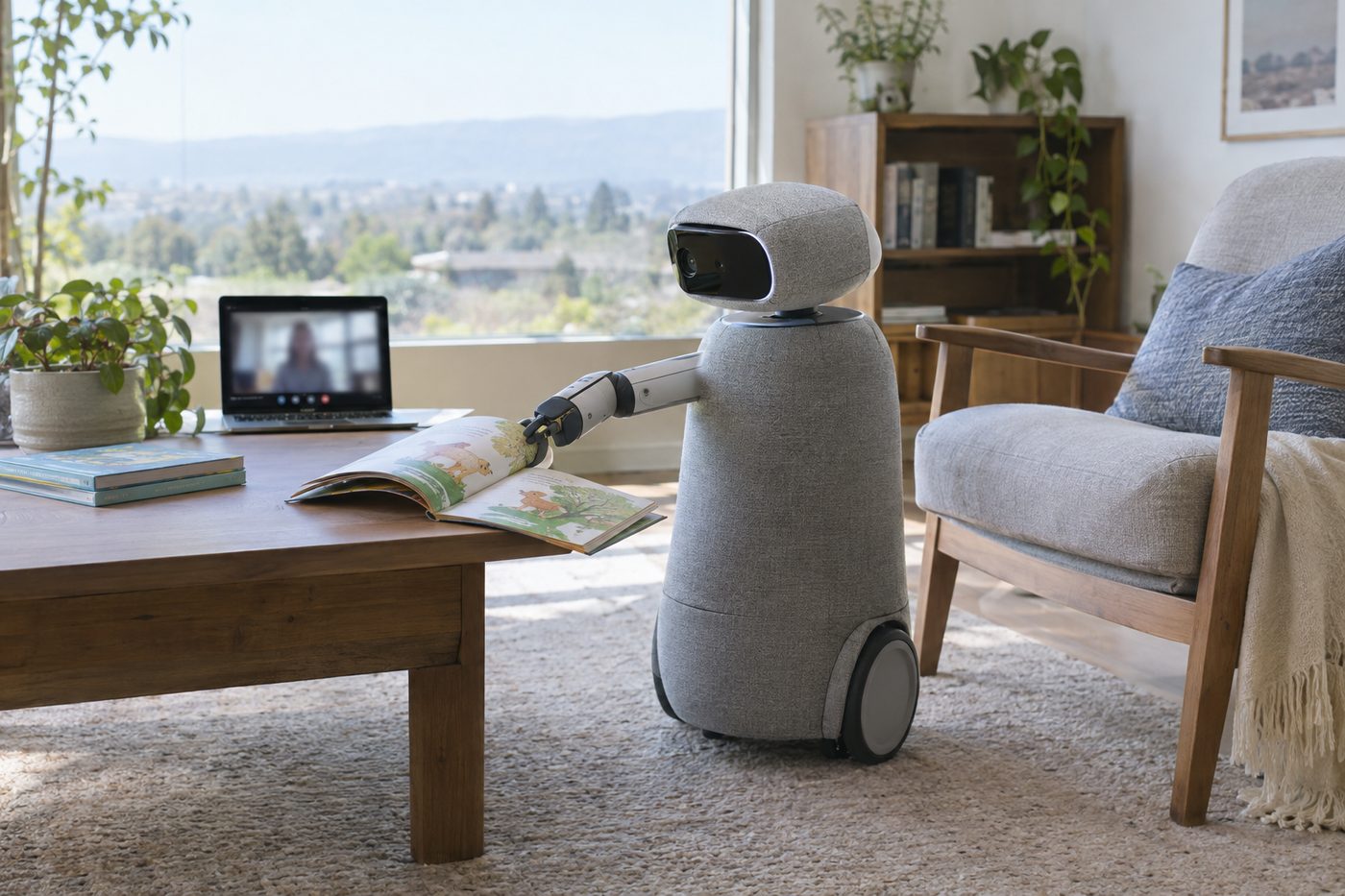
Plim Robotics has introduced a 1.65-meter-tall wheeled robot for home use, designed to assist with chores and enable remote operation by family or caregivers, with a listed runtime of two hours. The Munich-based company's rebrand from Devanthro to Plim Robotics comes as it pivots from an initial focus on elderly care toward support for a broader range of households. The robot uses Nvidia’s Jetson Thor computing platform and implements ROS 2 middleware to balance onboard and cloud-based processing capabilities, according to the Robot Economy record.
The robot features two primary modes. In autonomous operation, it can handle household tasks and provide companionship, while the “step-in” mode allows remote users to physically interact through the robot, transmitting their voice, movements, and face, which appears on the robot’s visor. Plim advertises that this mode can be used for remote connections over distances up to 9,000 kilometers. This approach aims to extend presence beyond video calls, letting a person at the other end of the line manipulate the robot’s body to read bedtime stories, assist in the kitchen, or perform shared activities, as detailed by Humanoids Daily.
Plim’s hardware includes a three-wheel omnidirectional drive, seven-degree-of-freedom arms with a 3-kilogram payload, and two-finger grippers for interacting with objects around the house. Sensing is accomplished via stereo RGB and depth cameras, a 4K fisheye RGB camera, millimeter-wave radar, and stereo microphones, while connectivity is provided by 5G and Wi-Fi 6. The outer body is finished with a soft covering to cushion incidental contact, and the animated face display supports not only expressions but also streaming the likeness of a remote operator, according to Humanoids Daily.
Edge AI is combined with cloud resources to enable both onboard processing and remote interaction. Although the robot is advertised as supporting round-the-clock assistance, the two-hour battery runtime means that continuous availability will require periodic charging and careful management of its duty cycle. The published specification stops short of promising 24-hour operation from a single charge. Full details on commercial terms and pricing remain unreleased, as the launch chiefly establishes the design and intended use cases, Humanoids Daily notes.
The origins of Plim trace back to home pilot deployments dating to 2024, as documented by the company. Initially, its work was tightly aligned with elderly care, but the new brand and product refocus broaden the target market. The website positioning now frames the robot as equally suitable for everyday household needs, with caregivers retained as a named audience but less central in the messaging, according to Humanoids Daily.
The remote interaction model, which Plim describes as more immersive than simple telepresence, sets it apart from many existing household robots. The ability for distant family members to “step into” the home could appeal in settings where physical visits are impractical. However, the product reveal does not yet quantify the robot's real-world success rates, nor does it detail how often human intervention overrides autonomy, leaving open questions on operational reliability until more pilot data is shared, the Robot Economy record reports.
Why Is This Important to Investors? Plim Robotics’ entrance into the home robot space introduces a differentiated service model centered on remote family and caregiver engagement, expanding total addressable markets beyond assistive care to mainstream households. Near-term competitive impacts will depend on how quickly Plim can document real-world performance and secure distribution or service partners willing to bet on a two-hour-runtime robot as a bridge between autonomy and remote human presence, as described by Humanoids Daily. Verified
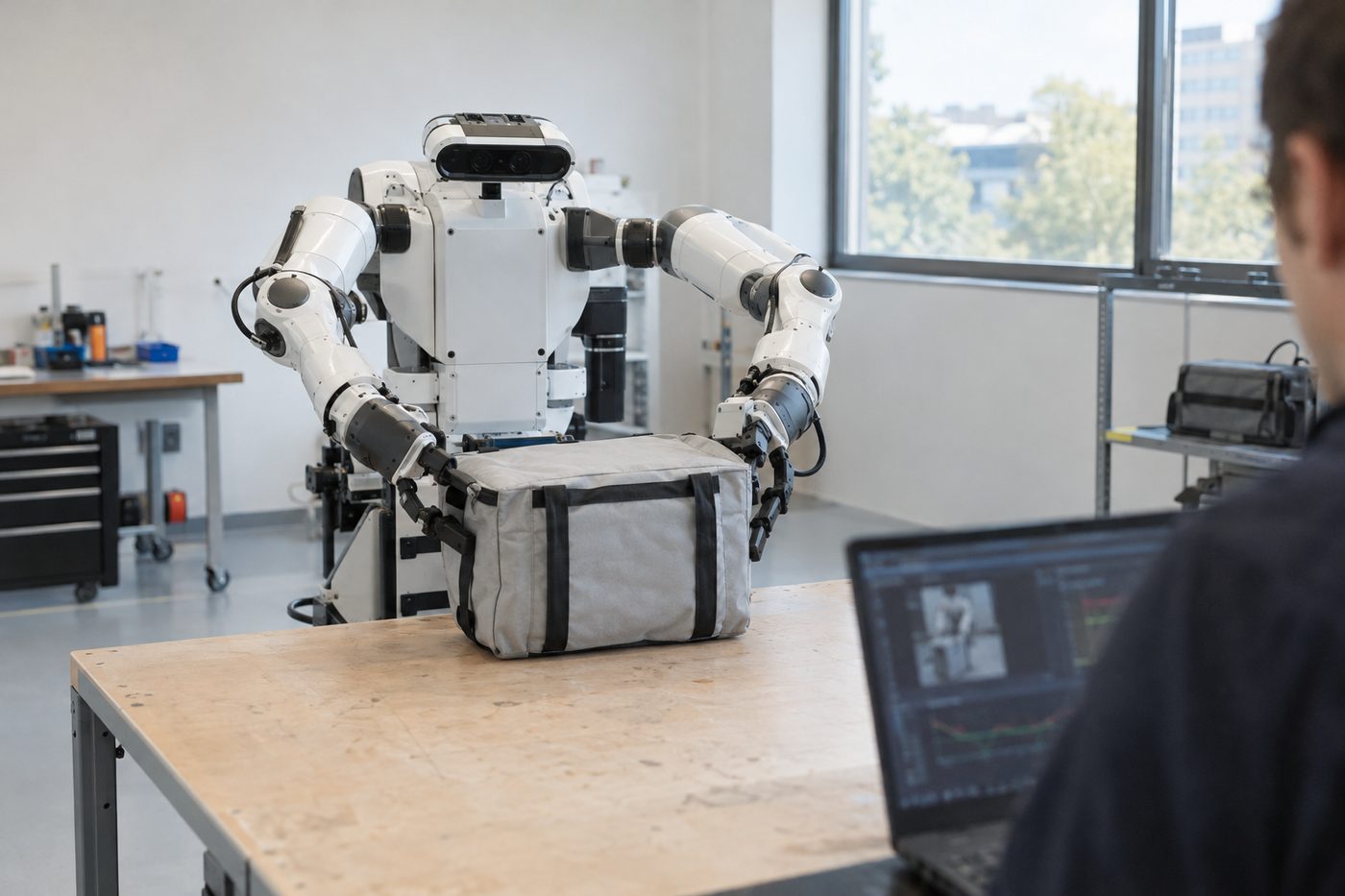
Icarus Robotics has completed the final major round of parabolic flight testing for JOY, its free-flying dual-arm robot, clearing a key milestone before sending the platform to the International Space Station in early 2027. Over four parabolic flights in September, JOY logged 66 microgravity arcs totaling two minutes of weightlessness—enough, the company says, to validate core manipulation, state estimation, and flight control systems. The next step is finalizing flight hardware for handoff to NASA in January 2027, according to the Robot Economy record.
JOY is designed specifically to tackle cargo and logistics inside the ISS, relieving astronauts of low-value manual tasks and allowing them to focus on research and mission goals. Icarus co-founder and CTO Jaime Palmer emphasized that the company achieved all defined stretch goals during the flights. The robot’s seven-degrees-of-freedom arms and adaptive grippers, built in-house, performed beyond expectations. CEO Ethan Barajas says matching terrestrial and microgravity performance was a significant win for the team, as cited by The Robot Report.
Icarus plans to teleoperate JOY initially on the ISS, with an autonomy system evolving as in-orbit experience grows. During flight tests, full teleoperation wasn’t possible due to constraints, so the team used pre-recorded set points and terrestrial data for microgravity benchmarking. This method let engineers compare simulated office routines with real-world zero-G results—a data-driven approach they say will bridge operational gaps ahead of ISS deployment, according to The Robot Report.
One operational bottleneck for JOY’s test campaign: Icarus had to move its evaluation to Canada because the only U.S.-based parabolic flight operator is temporarily out of service. This forced relocation highlighted a scarcity of microgravity test flights accessible to U.S. hardware startups, lengthening production cycles and pushing American teams to international providers. Icarus co-founder and CEO Ethan Barajas described this as a growing challenge for the U.S. commercial space robotics sector, as detailed by The Robot Report.
The technical focus of Icarus’ September campaign centered on JOY’s manipulation arms, as well as new controllers and trajectory sets. The company’s custom-built, adaptive arms are designed for solid manipulation of ISS payloads, with in-situ disturbance recovery tested across flight profiles. CTO Jamie Palmer detailed how the team validated state estimation and control, even physically moving JOY by hand to test its sensor-driven stability and flight accuracy, as reported by The Robot Report.
Distinguishing JOY from current ISS free-flyers like Astrobee, Icarus points to advanced on-board compute (an NVIDIA Jetson Thor T5000, rather than consumer-grade modules) and dedicated manipulation for cargo handling. JOY is positioned as a more capable, software-forward platform, built to use terrestrial advances in AI, robotics software, and hardware—a generational leap the company says the ISS has yet to see, according to The Robot Report.
Why Is This Important to Investors? Icarus Robotics’ ability to demo complex manipulation systems in real microgravity puts the company in a strong position for future ISS and commercial space contracts, and $6.1 million in seed funding already supports its next phase. Delays in U.S. microgravity testing could disadvantage domestic startups, advantaging those able to secure international test slots. Investors should watch for NASA’s scheduled JOY handover in January 2027, and the subsequent ISS mission as a first test of scalable multi-robot workflows in orbit, as Robot Economy record details. Verified
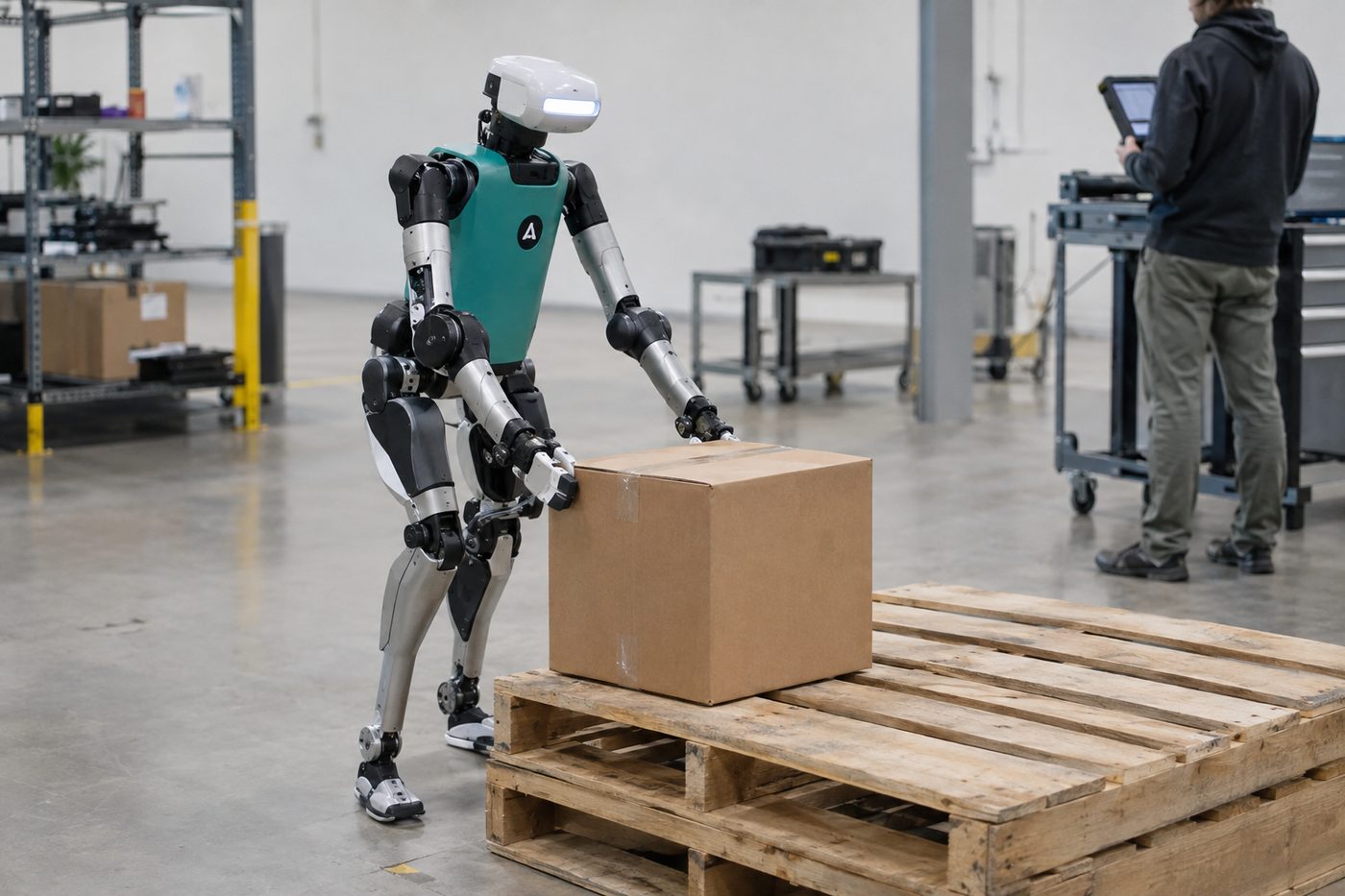
Agility Robotics moved one step from public markets after the SEC approved its merger with Churchill Capital Corp XI, setting a shareholder meeting for November 2 as the final hurdle before listing, according to the Robot Economy record. The merger would make Agility the first U.S. publicly listed pure-play humanoid robotics company with active commercial deployments. The company expects to begin trading under the ticker AGLT following the deal’s closure. The shareholder vote now determines how soon Agility might ring the bell.
Management told Robots & Startups (Andra Keay) that Agility has secured over $300 million in multi-year orders for the Digit v5 humanoid robot, with a sales pipeline pegged at several multiples of that figure. These orders provide clear demand visibility, and the pipeline suggests an expanding addressable market for commercial humanoids. Agility believes its operational track record and proprietary embodied AI give it a defensible industry position.
Proceeds from the merger are expected to exceed $620 million, funding both customer backlog and future Digit v5 deployments, according to Robots & Startups (Andra Keay). This capital will also support the next growth phase for Agility Robotics as they scale operations and accelerate delivery timelines. The company sees these resources as critical for meeting surging demand from enterprise buyers investing in robotics automation.
Agility’s leadership—anchored by recent board appointments and a designated audit chair—prepares for public-company compliance and oversight after the merger, the Robot Economy record shows. The company describes its commercial deployments as proven and underway, targeting logistics, e-commerce and manufacturing customers that face labor gaps and capacity constraints.
The IPO comes at a time when humanoid robotics is becoming more competitive. Tesla’s Optimus, Figure’s Figure 03, and UBTECH Robotics are all advancing industrial embodied AI, with Figure and Tesla both hinting that humanoids will become central to their future value, according to the Robot Economy record and Robot Economy record. OpenAI and Wandercraft are also scaling resources to compete for share in the sector.
Operating efficiency remains a headline focus: Agility’s recent product announcements included fast charging for 20-hour-per-day operation and a Digit v5 redesign tailored to commercial requirements, the Robot Economy record shows. These changes are designed to improve deployment uptime and address practical workforce issues for B2B customers.
Why Is This Important to Investors? Agility Robotics’ public listing, if approved by shareholders, would open direct equity exposure to one of the first U.S. humanoid robot vendors with validated commercial demand and a long order backlog. The funds will let Agility scale fast enough to defend its lead against Tesla, Figure, and UBTECH Robotics, while a successful public debut could reset investor benchmarks for valuation, revenue quality, and execution risk in this sector. Verified
Why we publish
The robot economy is being built right now, in filings, factory floors and funding rounds most people never read.
The Robot Economy reads them every week so you can act before the headlines. Robotics Weekly is free, for everyone following the shift. The paid edition adds the Brief, for operators and investors who have to act on it.
The paid edition
$8 / month
Public companies, capital, supply chains and analysis. Every Monday, every claim tagged and sourced.
SubscribeCharter price, locked for three years.
Try it first
Read four Monday issues of the paid edition on us. No card up front. Keep it at the charter price or walk away.
Start my free monthFree download
Vol. 1: twelve charts on where the machines, the money and the jobs are going.
Download the e-book