The paid edition
Everything plus the Brief
$8 / month
Public companies, capital, supply chains and analysis. Every Monday, every claim sourced.
Get the paid editionYour price won't go up for at least two years.
People, Products, Projects, and Plans
Volume 3, Week of November 16, 2026
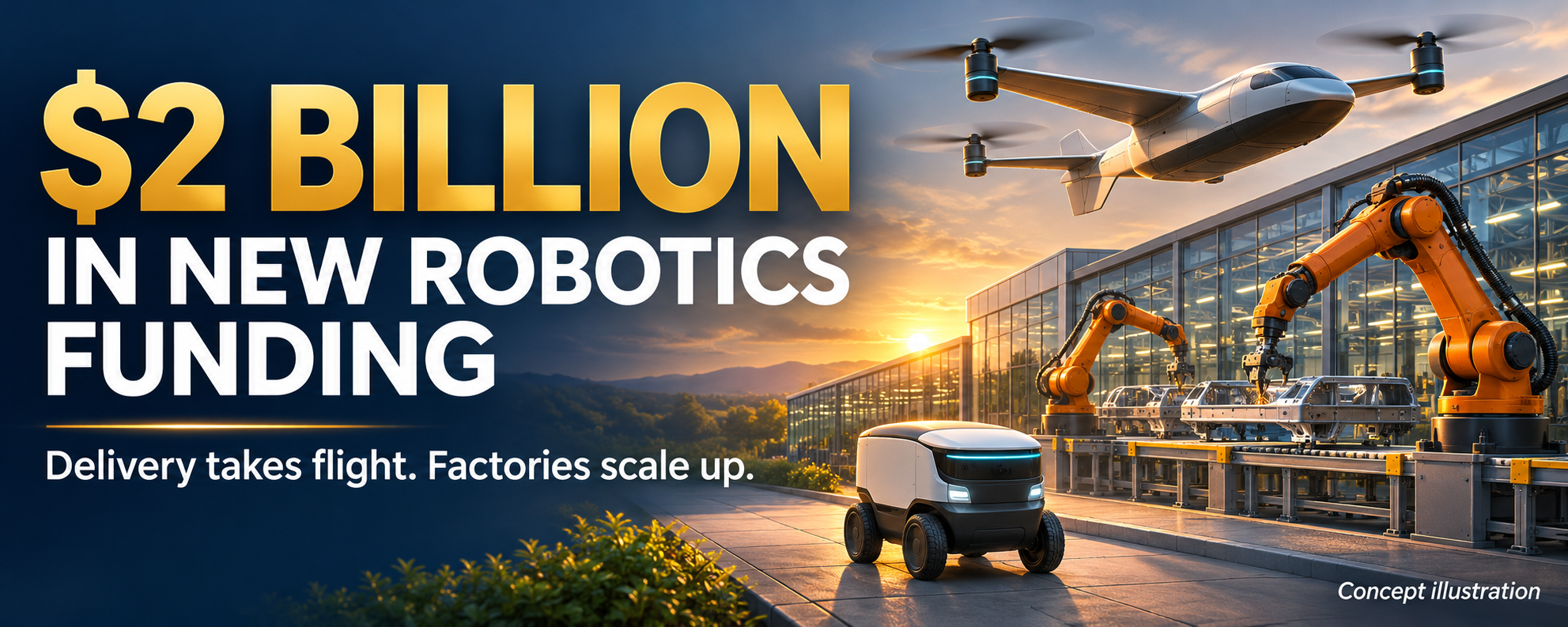

Physicl has secured $10 million in seed funding to accelerate its synthetic data platform for robotics and physical AI. The Paris-based startup says the proceeds will grow its team and power development of its simulation technology, offering researchers new tools to train and improve AI models for real-world tasks. Inovia Capital led the round, with participation from US Venture Partners, marking one of this year’s largest early-stage bets in physical AI, according to Robotics & Automation News.
Physicl’s core product, Studio, enables users to create bespoke 3D environments and generate targeted training data for difficult scenarios where models often fail. The platform features a library of 10,000 ground-truth 3D environments and 100,000 digital assets, unlocking billions of scene variations that can simulate edge cases—everything from odd lighting and unfamiliar objects to unexpected arrangements. By reproducing these problematic scenarios in simulation, researchers can address gaps in their model’s real-world reliability, Robotics & Automation News reported.
Key early partners include Meta, World Labs, Epic Games and SpAItial, all of whom use Physicl to hone their world models and robotics systems. In a recent project, SpAItial leveraged Physicl's data to improve its model’s room reconstruction accuracy, with the companies claiming a reduction of the model's reconstruction error rate by more than half. Physicl CEO Alex de Vigan argues that such improvements can be the difference in deploying physical AI at scale, citing the speed and specificity of Studio’s data generation.
The new investment will fund team expansion, product development and outreach to a wider base of AI researchers and developers. By making targeted synthetic training data more accessible, Physicl positions itself as a must-have platform for labs pushing the envelope in reliability and deployment of physical AI. Robotics & Automation News notes that the platform's flexibility—users can either select a designed environment or describe unique failure modes—sets it apart from conventional data collection approaches.
Why it matters. Gaps exposed in AI behavior by edge cases have held back broader adoption of robotics in unpredictable environments, from logistics to manufacturing and beyond. If Physicl’s synthetic data approach delivers on its promise to speed identification and remediation of model failures, the major winners will be robotics teams able to deploy faster and with fewer surprises. Investors are watching how quickly Studio expands its customer roster and whether empirical gains—like those seen with SpAItial—are replicable in fields beyond simulated room reconstruction, according to Robotics & Automation News.
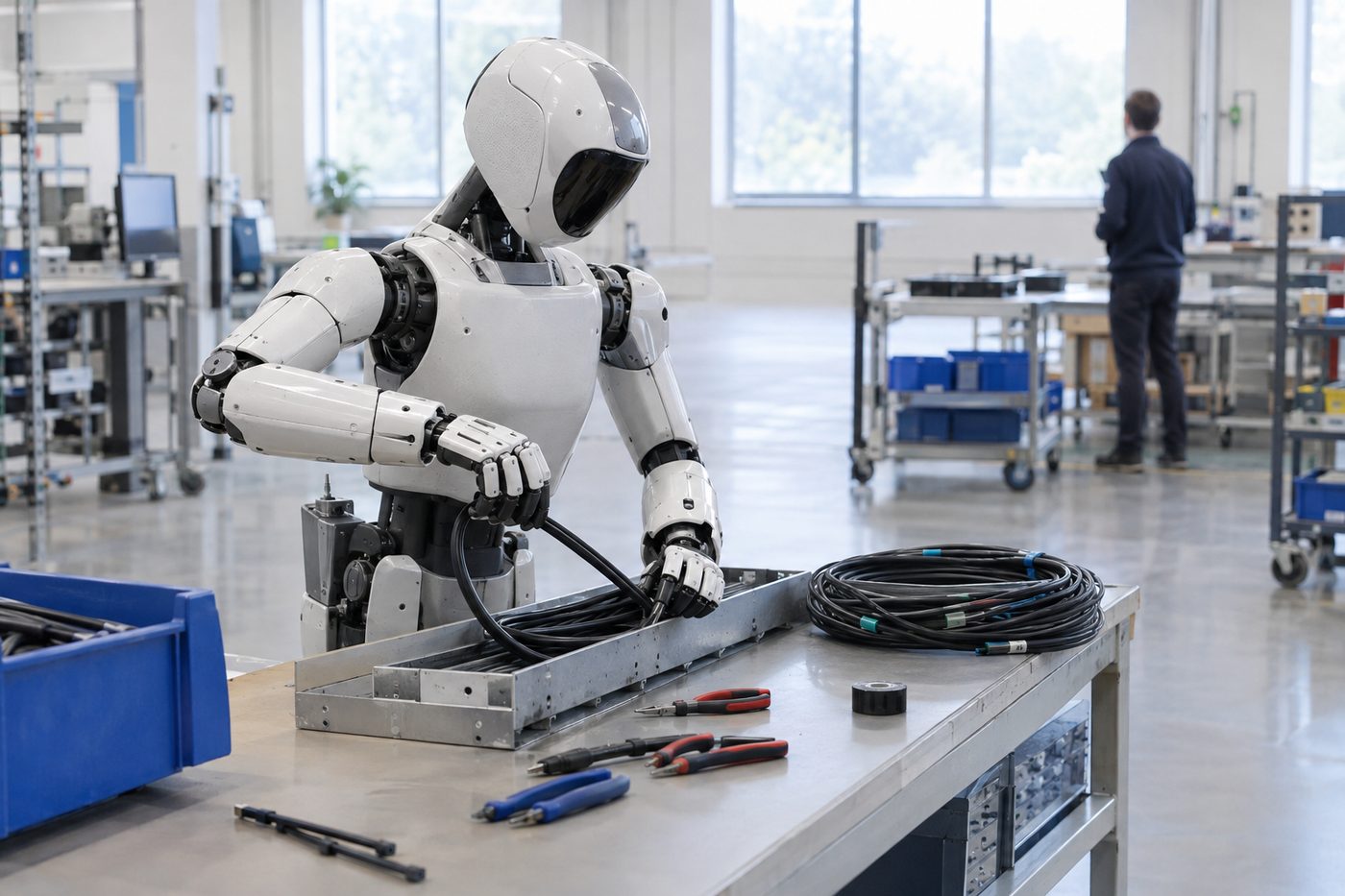
Swiss robotics firm Embodied AI has introduced AIR, a humanoid robot designed to learn factory tasks by working alongside people and adapting on the job. Launched at Humanoid Europe 2026, AIR aims to address the shortage of skilled factory workers—up to 1.9 million US manufacturing jobs could remain vacant by 2033, according to Deloitte and the Manufacturing Institute. Unlike traditional robots locked behind cages handling repetitive work, AIR is built specifically to take on high-dexterity tasks that still require a human touch and can be quickly reprogrammed to new roles. It moves on wheels for stability, has ultra-light tendon-driven arms for safety, and is being tested with global OEMs, the company told Robotics & Automation News.
The company engineered AIR from lab concept to full industrial humanoid in just nine months, spending less than rivals typically do to reach the same milestone. Embodied AI has already secured global contracts and is preparing to scale manufacturing. Its learning architecture begins every task under a human operator’s control; every move AIR makes is recorded, and the company’s AI software iteratively learns until it can finish the task unaided, usually within a month. Once trained, AIR’s skills can transfer directly to other robots, speeding rollout across production lines and reducing training time across clients, according to Robotics & Automation News.
This system is already proven on factory floors: when a leading consumer electronics maker tested five funded startups on a cable-handling task, only Embodied AI surpassed performance targets, achieving 98% reliability against a 90% goal. AIR incorporates core IP from CEO Francesco Stella’s doctoral research at Switzerland’s EPFL and draws on a founding team with top robotics credentials from Cambridge, MIT, and ETH Zurich. Its design sacrifices the complexity of bipedal walking for wheels, prioritizes operator-led learning, and puts all motors and electronics in its torso for balance—an architecture the company asserts improves both safety and uptime. Plans are in place for ISO/TS 15066:2016 compliance, with CE marking expected in 2027, the company told Robotics & Automation News.
Market appetite for physical AI is accelerating. The company cites Manufacturing Leadership Council survey data: 22% of manufacturers expect to use embodied AI such as humanoid robots within two years, more than doubling today’s 9%. At the same time, more than 80% of factory task hours are still expected to remain human-driven, according to Deloitte. This shows AIR’s selling point: robots should support the workforce in high-mix, fast-changing environments, rather than aim for full labor replacement. AIR’s gradual autonomy, collaborative design, and reliability record set it apart from most humanoids, which remain strictly in prototype or demo stages, Robotics & Automation News reported.
Why it matters. AIR’s architecture bets that market demand will be strongest for flexible, safety-centric robots that augment workers in factories where tasks change too quickly for conventional automation. If AIR delivers speed and reliability at scale, Embodied AI could win OEM deals that might otherwise go to larger, costlier rivals with less adaptable hardware. The next test is execution: watch for global production scaling and customer performance figures as CE-marked units come to market in 2027, as reported by Robotics & Automation News.
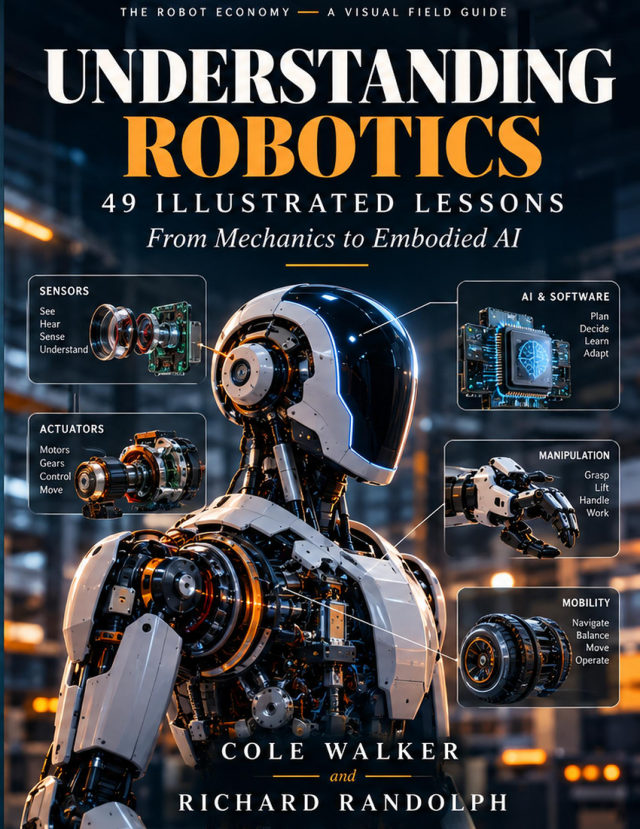
Free download — Understanding Robotics. Robotics Weekly's visual field guide: 49 illustrated lessons, from mechanics to embodied AI, by Cole Walker and Richard Randolph. Free with the Robotics Weekly list.
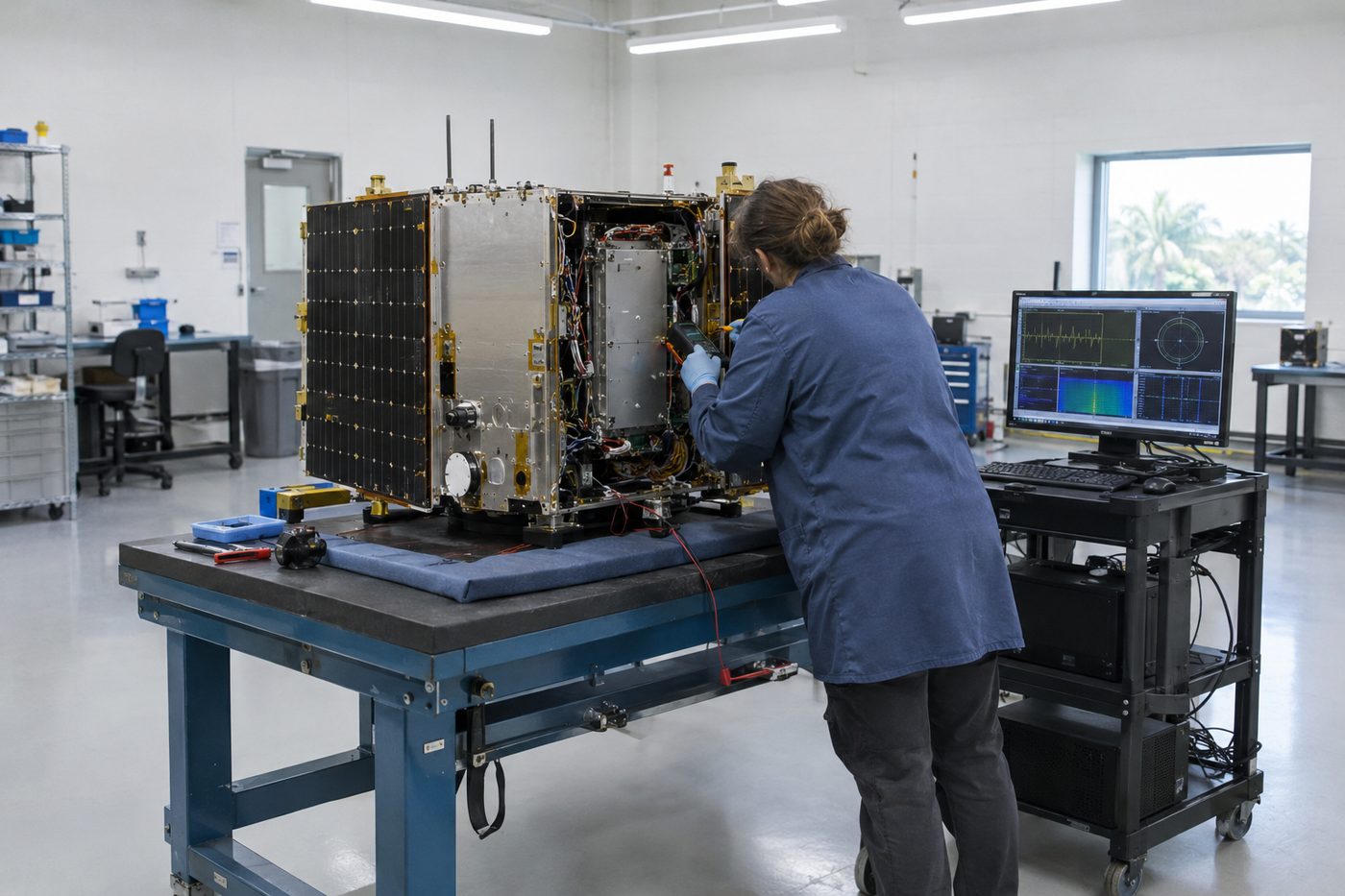
Amazon has yet to confirm any operational units from its Low Earth Orbit (LEO) satellite project after a Vulcan rocket failure destroyed 40 planned satellites. The loss compounds earlier challenges and delays for the project, with no evidence yet that any satellites are independently functioning in orbit. The company’s goal of building a global internet service remains in question after repeated setbacks, according to The Verge Tech.
The failed launch shows significant technical and logistical risks for Amazon’s ambitious push to compete with entrenched players in satellite communications. Unlike rival networks with thousands of satellites already operational, Amazon's LEO constellation project is struggling to establish even a single confirmed orbital presence.
The incident raises questions about program timelines and future reliability. Building a functional LEO network requires not only manufacturing and launching hundreds of satellites without major loss, but also establishing ground infrastructure and regulatory compliance. Repeated failures can drive up costs, erode commercial confidence, and postpone service launches indefinitely.
Amazon has not independently confirmed any operational LEO units, distinguishing its satellite program from competitors whose deployments can be externally validated. This lack of visibility limits reassurance to investors and customers eager for proof of progress.
Why it matters. The repeat failure of satellite deployment, with zero operational units verified, jeopardizes Amazon’s ability to challenge rivals in the global satellite internet business. Customers and stakeholders now face prolonged uncertainty, and the company’s aggressive timeline for global connectivity appears out of reach. Watch for Amazon’s next scheduled launch: without demonstrated capability, its satellite strategy faces escalating skepticism.
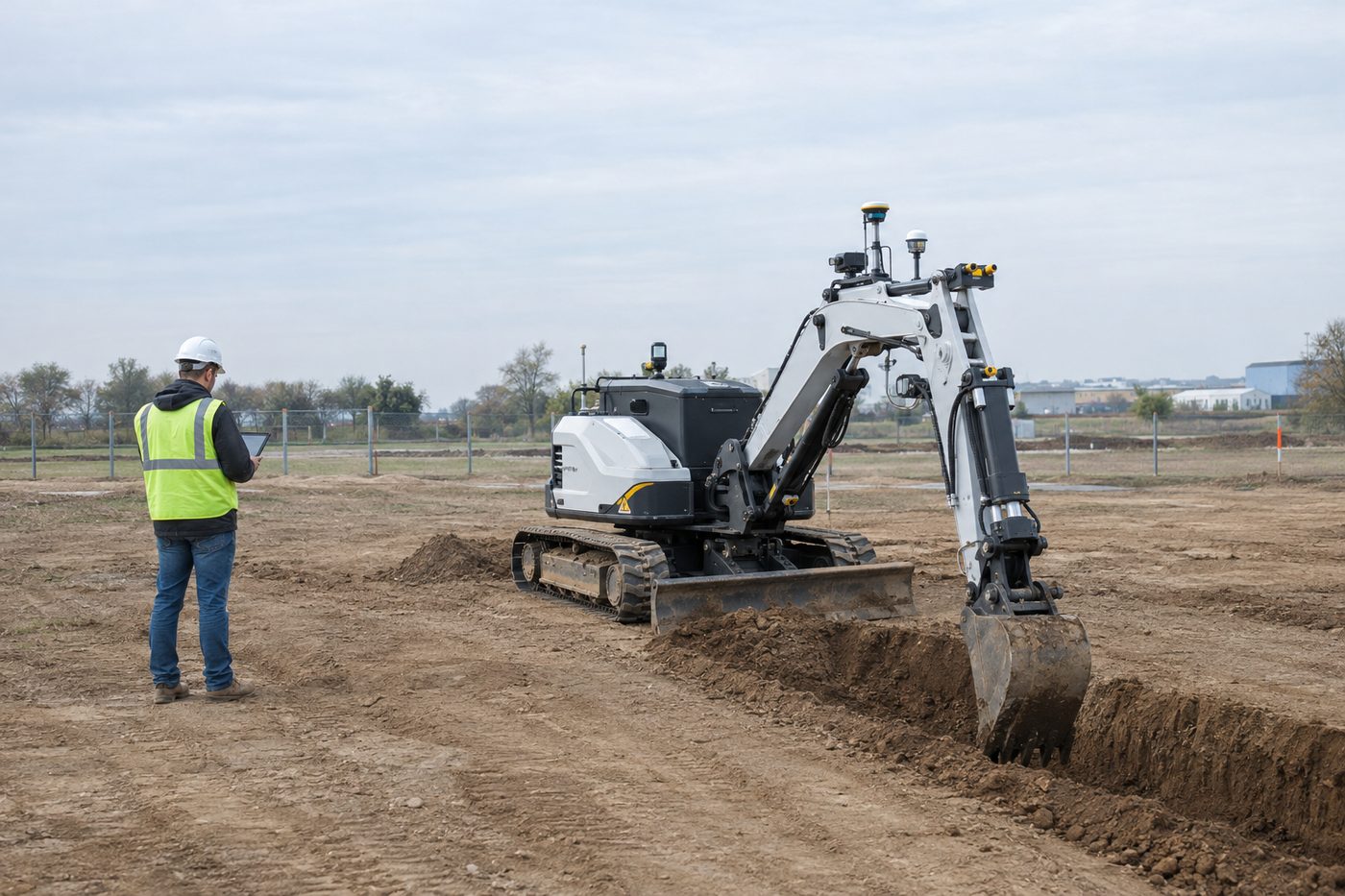
San Francisco’s Zacua Ventures has closed its second investment fund at $135 million, over twice the size of its original $56 million pool, to expand its reach in robotics, physical AI, and industrial technology. Fund II, which was reported as 35% oversubscribed, attracted commitments from more than 30 corporate and institutional investors spanning over 20 countries, according to Robotics & Automation News. Zacua’s strategy aims to address converging challenges in housing, energy, and labor across critical supply-side industries.
The firm, whose origin was focused on construction technology, is broadening its thesis to include manufacturing, energy, mining, infrastructure, and other “Physical Industries.” According to founding partner Vivin Hegde, Zacua sees mounting structural pressures—aging workforces, squeezed energy grids, and accelerating AI infrastructure demands—as a catalyst for accelerated automation and digital transformation. The new fund extends Zacua’s early-stage, founder-first approach to sectors that venture capital, in Hegde’s view, has commonly overlooked (Robotics & Automation News).
Zacua has already deployed capital from Fund II with a portfolio of 34 early-stage companies across 11 markets. Investments include Gravis Robotics—an ETH Zurich spinout focused on physical AI for autonomous construction equipment, which this year secured $200 million from SoftBank and reached a $1 billion valuation—and Origin Robotics, whose OG1 robot automates interior wall finishing. Zacua led Origin’s Series A round after the company emerged from stealth with $20 million in combined seed and Series A financing.
Investors in Zacua’s Fund II include Volvo Group Venture Capital, Holcim Maqer Ventures, Hilti Venture, Trimble Ventures, Acciona, DPR Construction, Mortenson, and Dubai Future District Fund. The firm notes its corporate backers provide more than capital, offering technical expertise, industrial customer access, and test-beds for scaling and validating emerging technologies in operational environments. Zacua’s first exit—Document Crunch—was acquired by Trimble earlier this year, underlining the firm’s access to industry buyers.
Why it matters. As venture funding tightens for many tech sectors, Zacua’s 35% oversubscribed fund signals rising institutional appetite for robotics and physical AI solutions aimed at aging, labor-constrained industrial sectors. Portfolio companies benefit not just from capital but from networks and pilot access across critical “Physical Industries.” The months ahead will show whether Zacua’s wider strategy delivers more exits and market-defining scale-ups—and whether other industrial venture funds follow with similarly expanded mandates (Robotics & Automation News).
Why we publish
The robot economy is being built right now, in filings, factory floors and funding rounds most people never read.
Robotics Weekly reads them every week so you can act before the headlines. It is free, for everyone following the shift. The paid edition adds the Brief, for operators and investors who have to act on it.
The paid edition
$8 / month
Public companies, capital, supply chains and analysis. Every Monday, every claim sourced.
Get the paid editionYour price won't go up for at least two years.
Try it first
Read four Monday issues of the paid edition on us. No card up front. Keep it at $8 a month or walk away.
Start my free monthFree download
The visual field guide: 49 illustrated lessons, from mechanics to embodied AI.
Download the e-book