The paid edition
Everything plus the Brief
$8 / month
Public companies, capital, supply chains and analysis. Every Monday, every claim tagged and sourced.
Get the paid editionYour price won't go up for at least two years.
A Robot Economy Publication
People, Products, Projects, and Plans
Volume 2, Week of November 9, 2026
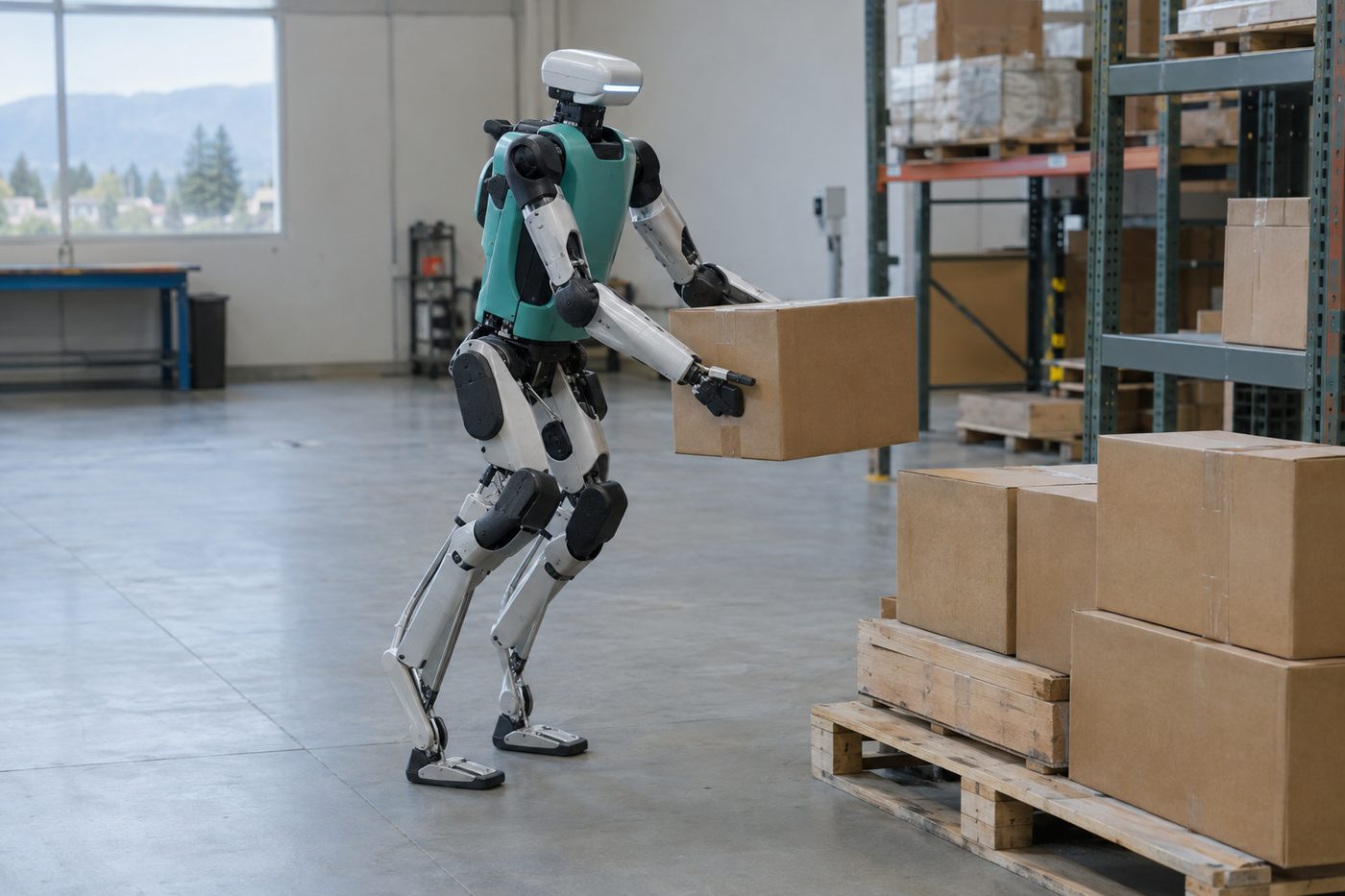
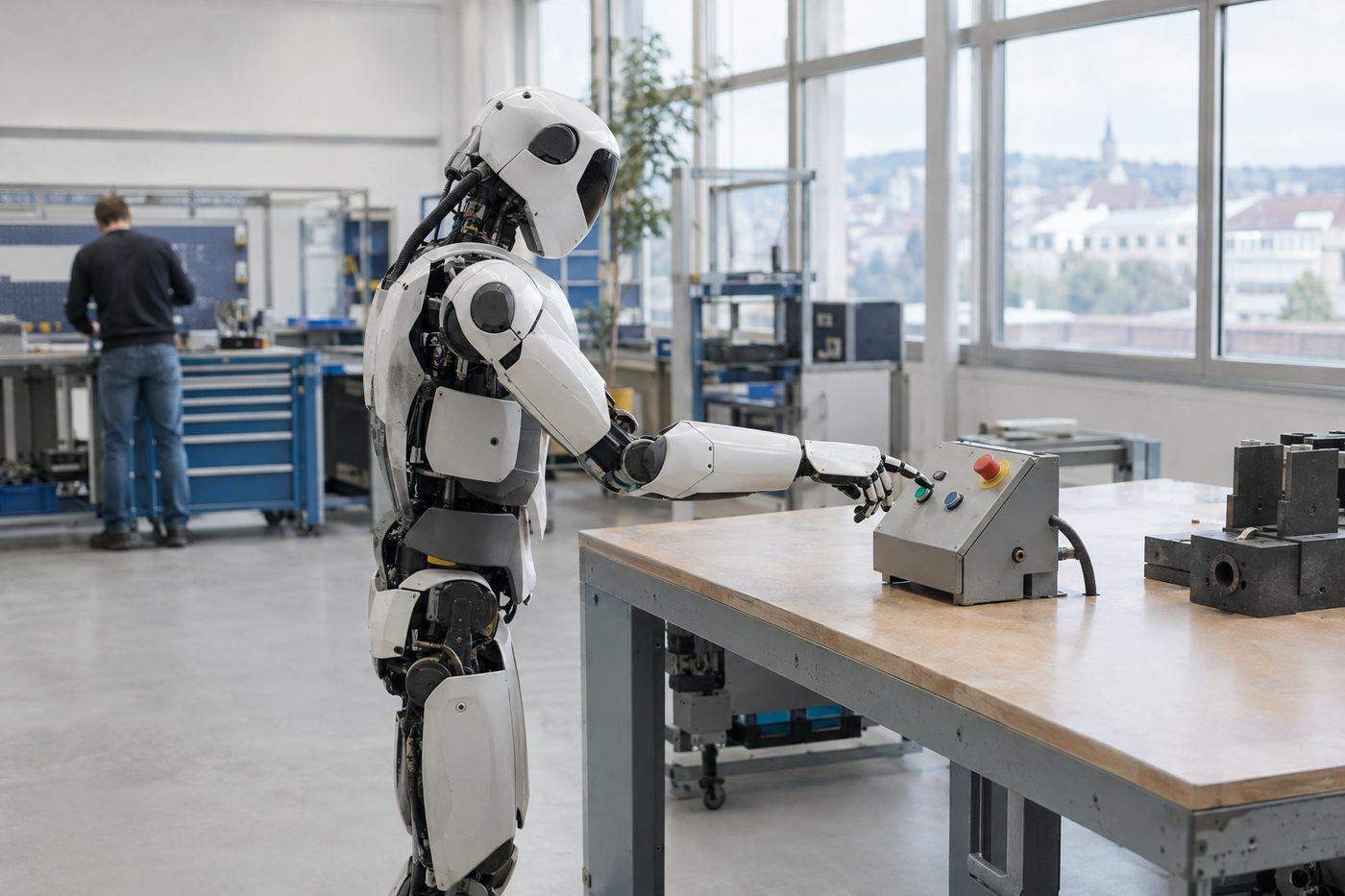
Neura Robotics CEO David Reger has publicized his refusal to enter the military robotics market, asserting in an interview that his company will instead prioritize civilian and industrial applications. Reger told DW Business that he sees greater opportunity and a clearer benefit for Europe by focusing on automation for physical work in factories and, eventually, homes. He draws a line against pursuing the lucrative defense sector, despite the growing financial incentives for robotics firms in military contracts, claiming his motivation is to contribute to Europe’s economic future. This stance comes amid rising investment in defense technology across the continent (Humanoids Daily).
Reger argues that supplying complex technologies for productive civilian use strengthens Europe’s international standing and fosters global interdependence, making this a better foundation for long-term prosperity and peace than competing in defense exports. He calls for Europe to rebuild influence through the capabilities and products it supplies worldwide and shapes Neura’s commercial priorities around those goals. In the interview, Reger distinguishes his vision from that of companies like Helsing, a defense-AI firm, which claims that military robotics are central to European security, according to Humanoids Daily.
Asked about competitive dynamics, Reger rejects the notion that Chinese humanoid robotics leaders have pulled decisively ahead. He states that for Neura, sensing and dexterity—what he describes as the robot's “nervous system”—matter more than speed or acrobatics, especially for practical use in daily life. He cites applications such as pressing buttons, turning switches, and handling packages as nearer-term targets for Neura’s products. The company’s robot-training facilities are reportedly engaged by outside partners developing these use cases, as detailed by Humanoids Daily.
Reger disclosed that, to date, Neura has shipped thousands of robots, with about 80% comprising arms and mobile vehicles; the remaining share includes humanoids and platforms. He did not provide a specific unit count for humanoid shipments or clarify the timeframe of these deliveries. The figures indicate that Neura’s current commercial focus is weighted toward industrial and mobile automation, with broader ambitions for humanoids positioned alongside these established categories, according to Humanoids Daily.
Why it matters. By publicly declining defense work, Reger is betting that European leadership in robotics will come from delivering civilian and industrial capabilities rather than military contracts. Neura must prove that its focus on practical and dexterous automation can scale—both commercially and technologically—against rivals who are willing to participate in the accelerating military robotics market. Operators and investors should watch whether Neura’s civilian-first strategy secures major contracts, as the company aims to become “the largest taxpayer in Europe” (Humanoids Daily). Reported
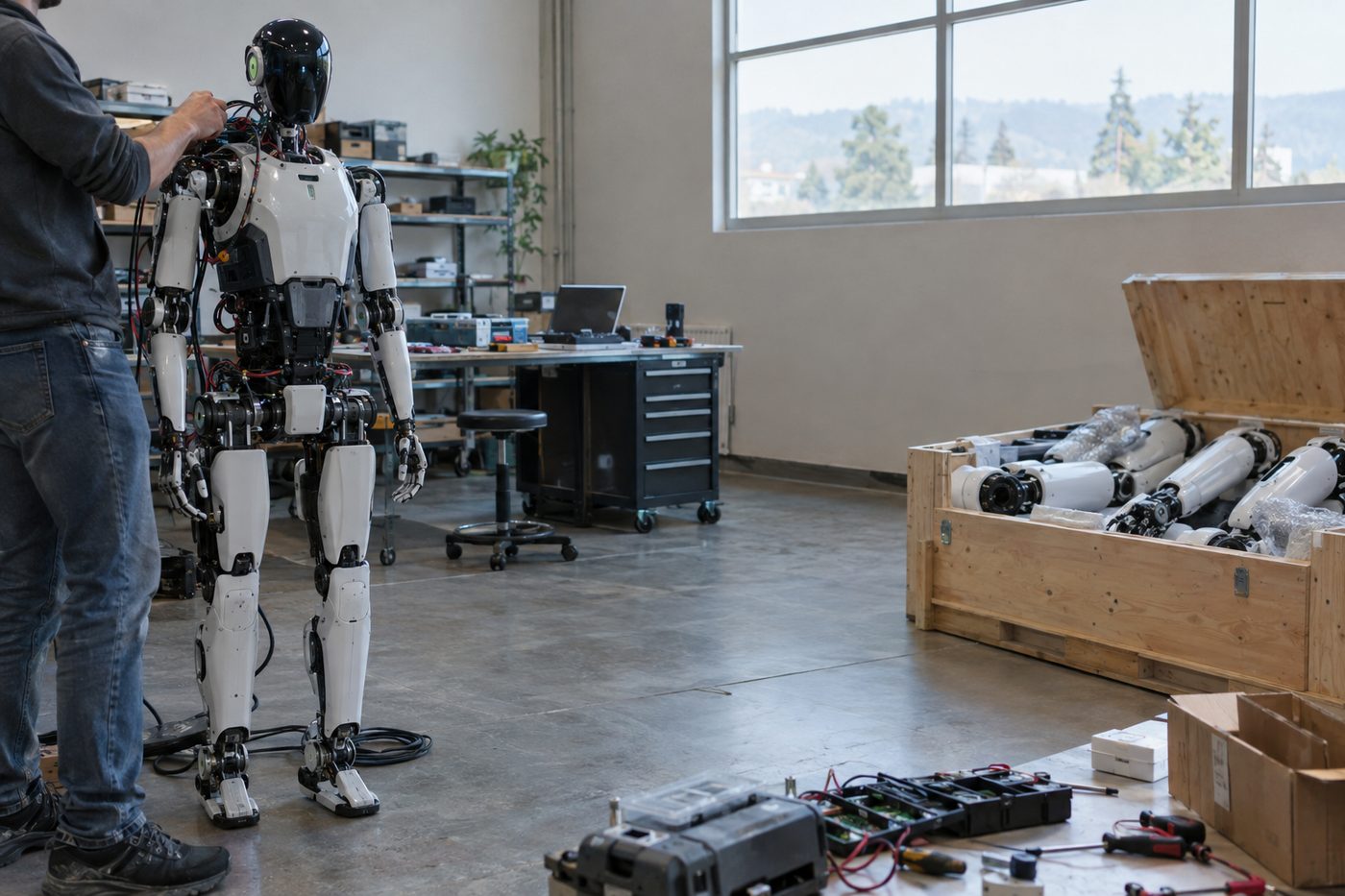
Ai2 has launched ToyBlocks amidst intensifying global tensions over robotics technology, data, and critical components, according to Robots & Startups (Andra Keay). The release comes as robot manufacturers and their investors navigate new frontiers in supply chain restrictions and data sensitivity. The same week saw Agility Robotics raise $465 million in its IPO, only to find itself in a stock market rout driven by broader turmoil in technology equities.
The context for ToyBlocks’ debut is striking: geopolitical action now targets robot supply chains and sophisticated end products alike. China remains the world’s largest consumer—installing more than 54% of all new industrial robots each year—but has tightened its grip on technology access, blocking SoftBank’s $5.4 billion acquisition of ABB Robotics and imposing new restrictions over data transfer and dual-use robot exports. Recent bans on Chinese-made robots, drones, and robot components in the US echo these anxieties over national security and AI-related data.
Robotics market participants face new headwinds in sourcing critical materials. Monopolies and trade blockages affect rare earths, high-tier motors, and advanced compute chips—core elements for both ‘ordinary’ and advanced robots. These trends make every new robotics product, including Ai2’s ToyBlocks, part of a global contest for technology leadership and supply chain resilience, according to Robots & Startups (Andra Keay).
Agility Robotics, a key player featured alongside ToyBlocks’ release, has set ambitious plans using its new capital, targeting the launch of Digit 5 with deliveries in the first half of 2027 and costs expected to fall sharply from $150,000 per robot at launch to $30,000 with scale. Major customers like Amazon, Toyota, and GXO anchor Agility’s early deployments, while backers include Foxconn, Nvidia, and SoftBank Vision Fund 2, Robots & Startups (Andra Keay) noted.
Why it matters. Ai2’s ToyBlocks illustrates how robotics product development now operates under unprecedented geostrategic pressures. Companies must contend not just with technical hurdles or market competition, but with restrictions on capital, market access, and critical component supply. The next set of outcomes to watch will be whether other regions replicate China’s moves and how quickly restrictions tighten on both robotics hardware and software across borders, shaping which players can compete or even survive. Reported
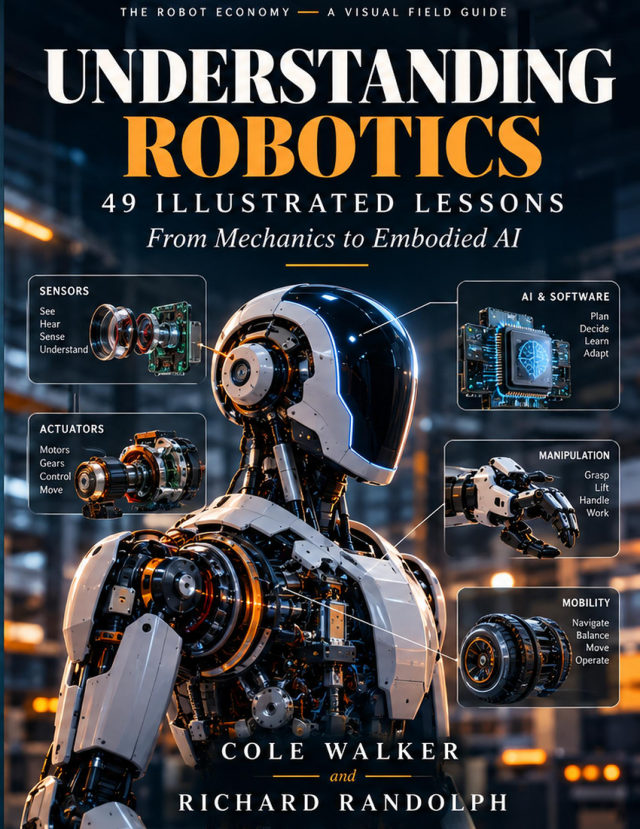
Free download — Understanding Robotics. The Robot Economy's visual field guide: 49 illustrated lessons, from mechanics to embodied AI, by Cole Walker and Richard Randolph. Free with the Robotics Weekly list.
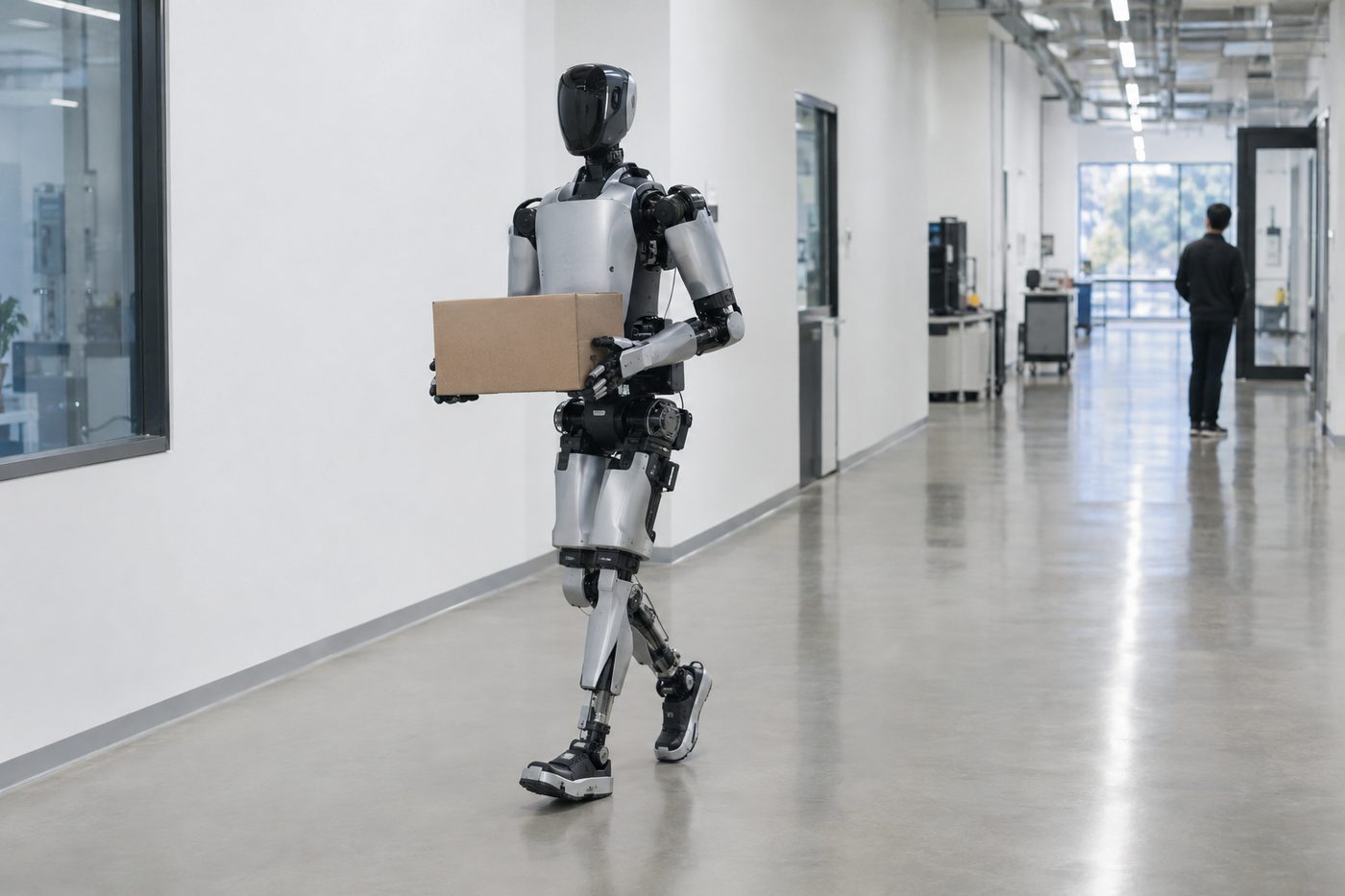
Figure has filled its headquarters with operational Figure 03 humanoid robots, with videos showing dozens of robots moving throughout the facilities both inside and outside, according to Humanoids Daily. The company, led by CEO Brett Adcock, is described as being close to having more robots than employees. The precise number of robots engaged in paid work remains undisclosed.
Footage released recently shows the Figure 03 units performing various tasks and traversing different environments within the company premises. These robots are seen operating in real time, not just in lab demonstrations. The scale of deployment within company walls demonstrates a sharp acceleration in internal testing and operational exposure for the humanoid platform.
Company representatives have not specified how many of these deployed Figure 03 robots are assigned to operational jobs as opposed to internal research or testing. The public updates focus on raw deployment numbers, not revenue-generating assignments. This leaves open questions about Figure’s current product readiness for external commercialization.
Figure appears to be positioning itself for further growth, with visible progress in robot population at headquarters as a proxy for throughput and system maturity. Other players in the humanoid field have recently highlighted paid pilots and external deployments, while Figure’s emphasis for now remains on internal use. The competitive dynamic with peers such as Agility Robotics, who began Nasdaq trading this month (see Headlines), places Figure’s internal headcount of robots and their work status in sharper relief.
Why it matters. Figure’s willingness to deploy dozens of humanoid robots signals advancing development and confidence in hardware and safety for real-world tasks, but the lack of detail on paid deployments means concrete commercial traction is still unverified. Investors and partners will be watching for technical milestones to convert into external pilot programs or commercial contracts, setting the next stage for Figure’s transition from R&D to revenue. Reported
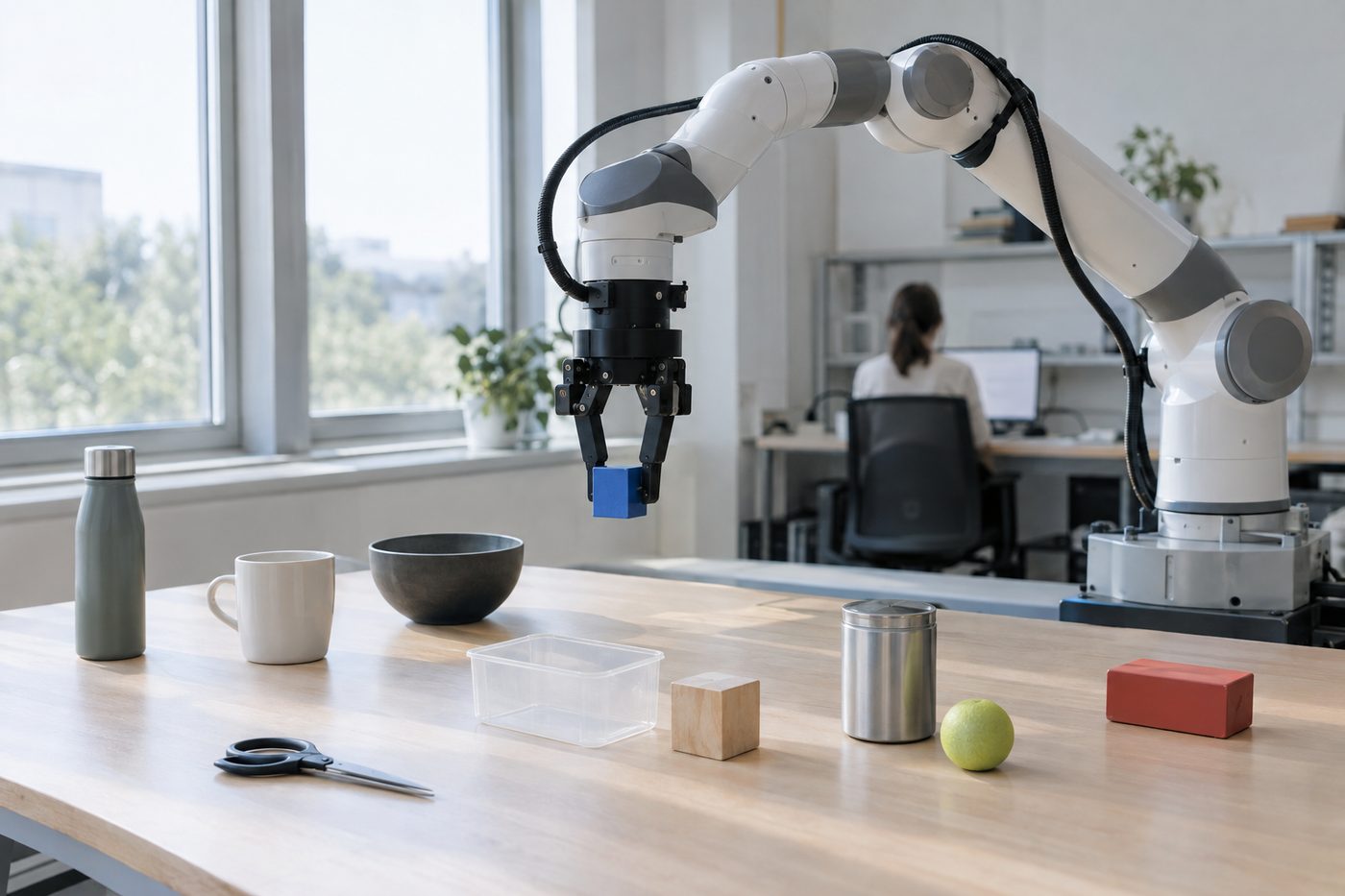
Physicl has secured $10 million in seed funding, led by Inovia Capital, to help bridge the sim-to-real gap that frustrates robotics developers, according to TechCrunch Robotics. The company, founded by CEO Alex de Vigan, aims to deliver high-fidelity digital environments that make simulated robotic training more reflective of real-world complexity. De Vigan and his team previously built nfinite, a firm known for generating high-quality 3D e-commerce content, pivoting their tech stack after generative AI disrupted their initial business.
The Physicl platform is designed to convert unstructured real-world data—like images and lidar—into accurate, physically correct 3D environments. This allows for the generation of synthetic training datasets with precise geometry, materials, and physics. Physicl distinguishes itself by enabling customers to produce billions of permutations for model training and auto-generate targeted data when current training routines show deficiencies. The company sees itself not only as a data supplier but as a provider of ongoing synthetic data tooling for robot and AI developers.
To demonstrate impact, Physicl launched Studio, a product shipping with 10,000 3D environments and 100,000 object assets. Studio lets researchers and integrators build highly specific scenes to train robots, addressing challenges like clutter, shadowing, and fine-grained object manipulation. An early collaboration with world model developer SpAItial, which used Studio’s resources to improve its Echo-3 simulator, showcased Physicl's value for next-generation simulation requirements; SpAItial’s CEO Matthias Niessner said high-fidelity synthetic data was vital for their system’s training performance, as TechCrunch Robotics reported.
De Vigan characterizes the market as young and crowded, with many startups collecting, labeling, or generating training data across diverse formats and modalities. Physicl’s focus is on easing ongoing experimentation, reducing the hand-curation bottleneck with pipelines that automate high-volume, fine-grained data synthesis. Industry demand is driven by the persistent shortcomings of training physical AI on video alone and the prohibitive cost and latency of labeling real-world sensor data. Physicl positions itself for users who want iterative control over their data creation—whether training foundation models or testing operational edge cases.
Why it matters. Physicl’s entry intensifies competition among synthetic data platform providers, raising the bar for realism in digital simulation—a key if robots are to meet advertised performance levels outside the lab. If the firm’s approach scales, robot model builders and world simulation companies could see reduced training cycles and higher transferability to the real world, but entrenched labels and simulation incumbents may be pressured to rethink their pipelines. Deployment and customer results in 2027 will be critical to gauge adoption and efficacy, as TechCrunch Robotics documents. Reported
Why we publish
The robot economy is being built right now, in filings, factory floors and funding rounds most people never read.
The Robot Economy reads them every week so you can act before the headlines. Robotics Weekly is free, for everyone following the shift. The paid edition adds the Brief, for operators and investors who have to act on it.
The paid edition
$8 / month
Public companies, capital, supply chains and analysis. Every Monday, every claim tagged and sourced.
Get the paid editionYour price won't go up for at least two years.
Try it first
Read four Monday issues of the paid edition on us. No card up front. Keep it at $8 a month or walk away.
Start my free monthFree download
The visual field guide: 49 illustrated lessons, from mechanics to embodied AI.
Download the e-book